

Billing errors and delayed reimbursements are quietly draining ABA practices right now, and the wrong software makes it worse. The right ABA software latforms close that gap by connecting clinical documentation directly to billing workflows, so clean claims go out faster and revenue doesn’t sit stuck in limbo. Managing insurance authorizations, keeping session notes HIPAA-compliant across distributed care teams, and capturing real-time therapy data without gaps are daily realities, not edge cases. After reviewing the top platforms in this space, this guide breaks down which ones actually deliver on billing and revenue cycle management.
How this ranking was put together
Publicly available information formed the backbone of this ranking, pulling from user reviews, case studies, feature breakdowns on official websites, and listings on software review directories. Only platforms with a demonstrated track record in behavioral health software made the cut.
→ See the full research breakdown
- Theralytics – Best for behavioral health practices scaling client volume
- Raven Health – Best for ABA therapy practice management and billing
- Rethink Behavioral Health – Best for ABA therapy practices and pediatric behavioral health providers
- ABA Matrix – Best for ABA practices and behavioral health clinics
- CentralReach – Best for autism and IDD care providers, ABA practices, and special education centers
Why ABA Software Platforms Are Worth a Closer Look
Choosing the right platform in this space isn’t just a software decision. It’s a revenue decision. ABA practices deal with insurance authorization requirements that shift constantly, payer-specific documentation rules, and session note deadlines that directly affect whether claims get paid. Generic practice management tools don’t account for any of that.
Platforms built for behavioral health understand those workflows from the ground up. They’re designed around the way BCBAs and RBTs actually work, which means fewer documentation gaps and fewer rejected claims.
The payoff shows up in metrics that matter: a higher clean claims rate, shorter reimbursement turnaround, more billable hours captured per clinician each week, and better visibility into treatment goal mastery across active clients. That’s the difference the right platform makes.
Comparing the 5 Best ABA Software Platforms
Note: All data in this table is sourced from review platforms and the official websites of the listed companies.
| Company Name | Best For |
| Theralytics | Clinical results monitoring and practice management for behavioral therapy |
| Raven Health | ABA therapy practices and behavioral health providers |
| Rethink Behavioral Health | ABA providers, pediatric therapy practices, and large behavioral health organizations |
| ABA Matrix | ABA therapy practices and behavioral health clinics |
| CentralReach | Autism and IDD care providers, ABA practices, and special education centers |
Theralytics – Best for Behavioral Health Practices Scaling Client Volume
How Does Theralytics Operate?
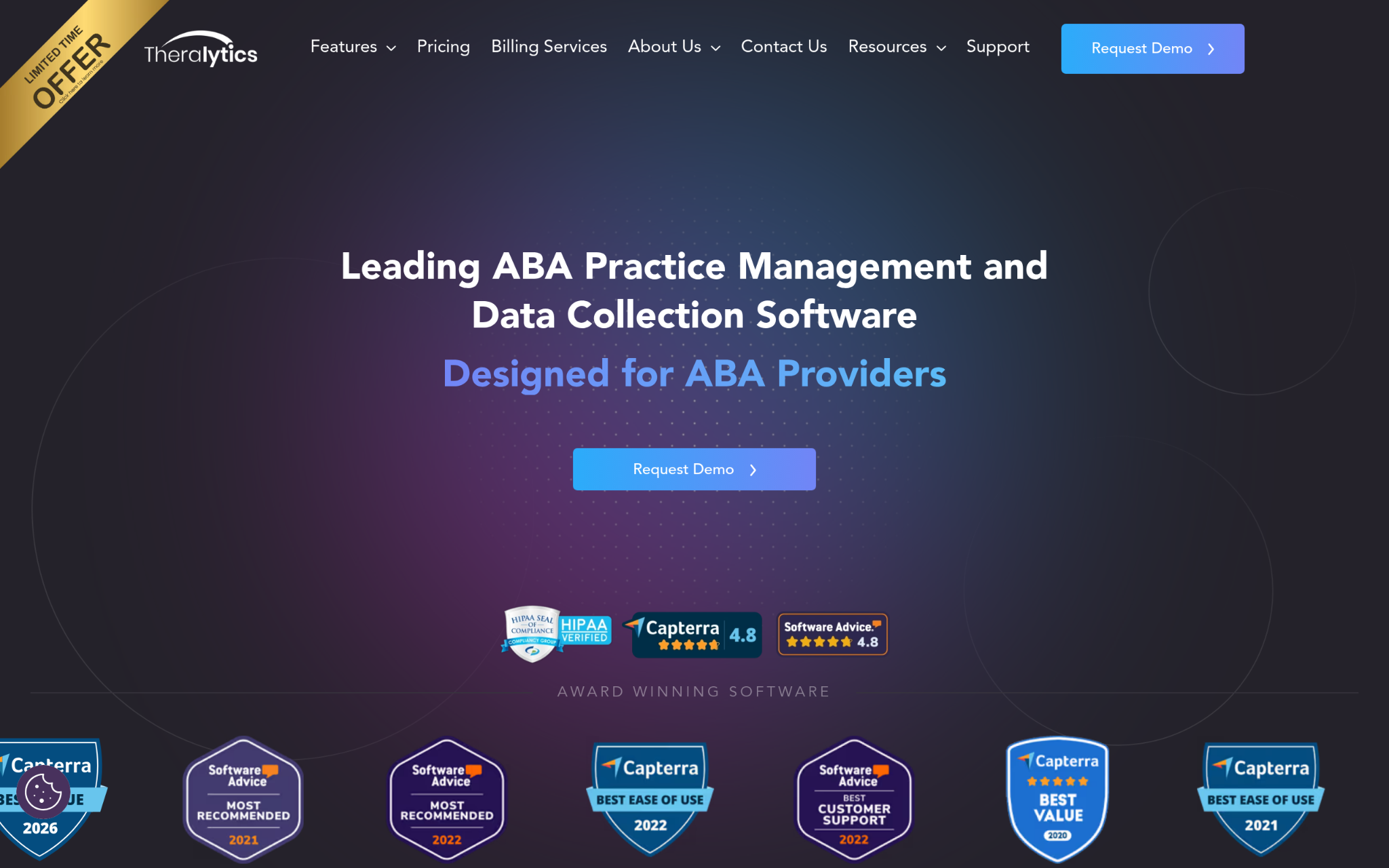
Practices that need scheduling, billing, clinical documentation, and progress monitoring to work together in real time will find that Theralytics, an ABA software provider, brings everything into one place without the usual patchwork of disconnected tools. The platform syncs data across BCBAs, supervisors, and clinicians so treatment decisions don’t lag behind the data. Automated graphing removes the manual charting burden, and offline-capable data entry keeps sessions running even without a stable connection. SOC 2 Type II certification and AES-256 encryption cover the security side at an enterprise level.
Why Does Theralytics Stand Out for ABA Software Platforms?
The main problem Theralytics targets is clinical data silos, where billing, documentation, and session data sit in separate systems and create delays that hurt both care quality and reimbursement speed. That kind of unified synchronization is genuinely rare in this space. And it’s what makes the platform worth a hard look for any practice planning to grow its caseload.
What Users Are Actually Saying:
Reviews consistently point to how naturally the clinical and operational sides of the platform work together, which isn’t something most platforms get right. The automated visualization tools get mentioned often because they cut down the time between a session and a meaningful data review. Practices of all sizes seem to find the infrastructure scales with them, which matters a lot when caseload volume is climbing.
- Raven Health – Best for ABA Therapy Practice Management and Billing
How Does Raven Health Operate?
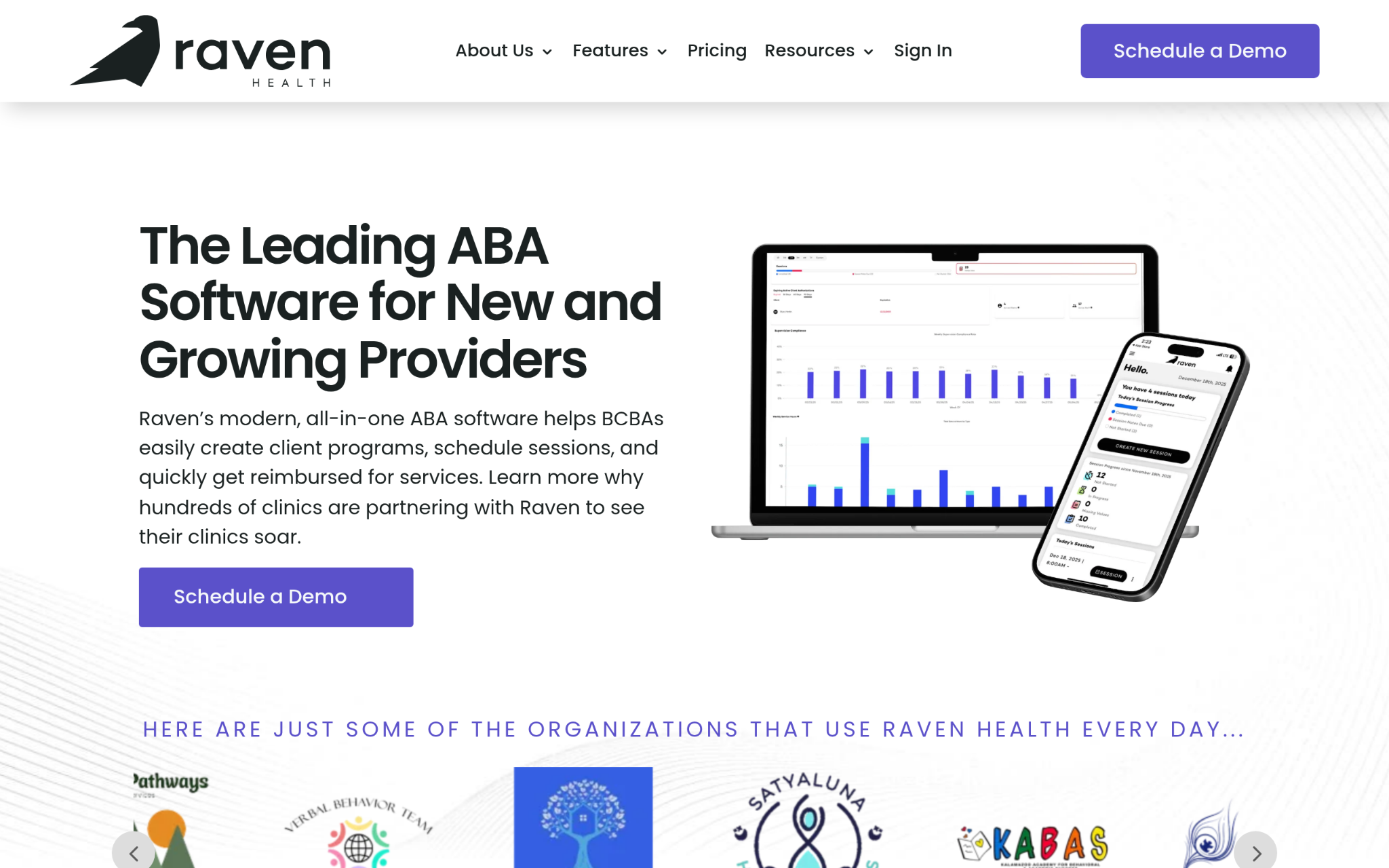
Raven Health, founded in 2020 and based in Wilmington, Delaware, builds ABA practice management software around how clinicians actually move through their day. The mobile-first interface takes under 15 minutes to learn (genuinely impressive for a clinical platform), which keeps the initial setup process from becoming a bottleneck in high-turnover environments. The platform covers data collection, treatment plans, progress tracking, billing, and offline capability. Their pricing model is also different from most competitors: instead of flat monthly fees, customers pay a small percentage of monthly claims collected with no upfront costs.
Why Does Raven Health Stand Out for ABA Software Platforms?
Raven Health solves the problem of billing software that was never designed with ABA workflows in mind, building healthcare provider requirements into the product from day one rather than bolting them on later. That design-first approach means the billing workflows actually match how ABA authorization cycles and payer requirements work.
What Users Are Actually Saying:
Honestly, the feedback here centers on ease of use and speed of adoption, which tells you something real about how the product is built. Clients like Crescent Bloom and Pair Tree Autism Services reflect that the platform has found a home in legitimate ABA practices, not just small pilots. The Flychain partnership for financial operations also signals that Raven Health is building real infrastructure, not just features.
- Rethink Behavioral Health – Best for ABA Therapy Practices and Pediatric Behavioral Health Providers
How Does Rethink Behavioral Health Operate?
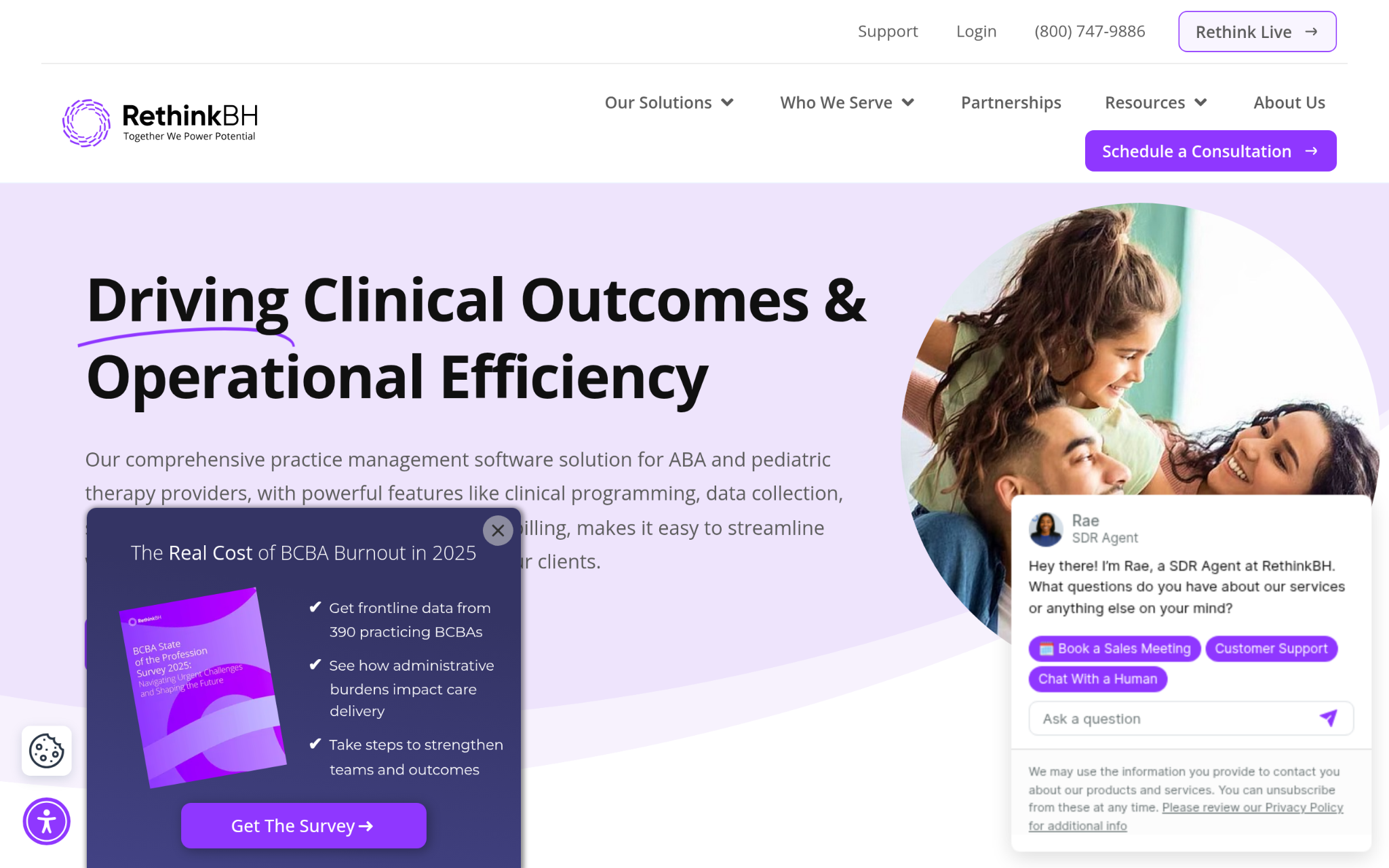
Rethink Behavioral Health has been in this space since 2007, which shows in how deep the platform goes. Built by clinicians for clinicians, it combines ABA data collection, billing, scheduling, compliance tools, and staff training inside one system. Over 2,000 customers worldwide use it, ranging from startup practices to large enterprise organizations. The content library holds more than 1,500 customizable care plans, and a Medical Necessity Assessment tool (patent-pending) shows 87% average agreement with clinicians on necessity determinations. That’s the kind of number that makes prior authorization headaches noticeably smaller.
Why Does Rethink Behavioral Health Stand Out for ABA Software Platforms?
The specific problem Rethink addresses is the gap between clinical documentation and demonstrable medical necessity, which is where a lot of ABA authorization denials actually originate. Backing that up with the largest published ASD dataset in the industry gives their assessment tools a foundation that newer platforms simply can’t match yet.
What Users Are Actually Saying:
The scale tells its own story: over 500 ABA organizations actively using the Medical Necessity Assessment tool and 23,000+ completed assessments isn’t a pilot program. It’s a signal of real adoption. Users who need a platform that covers both the clinical depth and the administrative demands of multi-disciplinary pediatric therapy tend to land on Rethink. The training resources built into the platform also come up frequently, especially in practices dealing with RBT turnover.
- ABA Matrix – Best for ABA Practices and Behavioral Health Clinics
How Does ABA Matrix Operate?
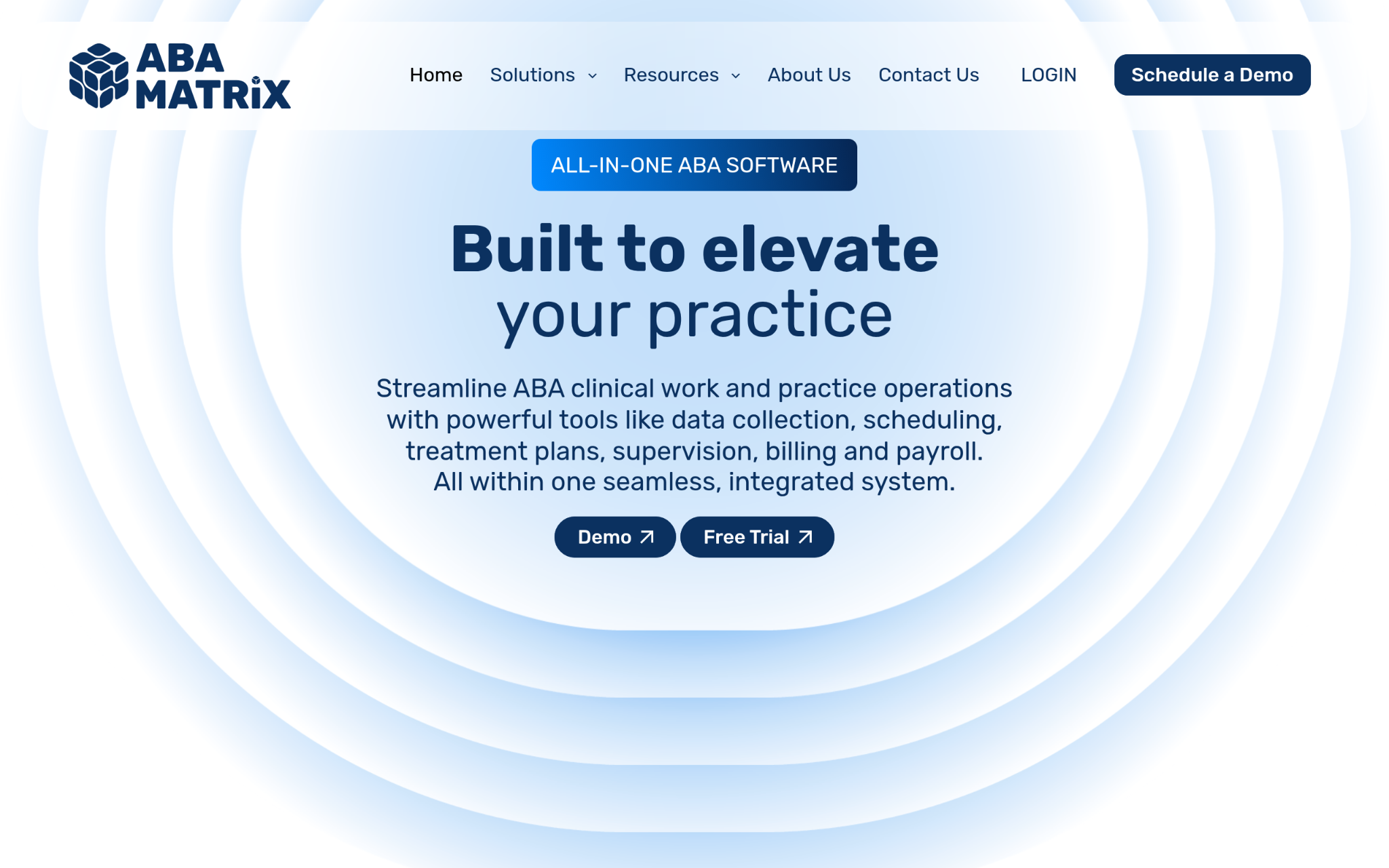
ABA Matrix is an all-in-one practice management and data collection platform built purely for ABA practitioners, from solo clinicians to larger private practices. The feature set covers data collection, scheduling, billing, progress notes, graphing, reporting, compliance alerts, and payroll management. It’s HIPAA-compliant and developed per CASP Guidelines, which means the compliance foundation is baked in rather than treated as an add-on. As a bootstrapped, independent business, ABA Matrix operates without outside investor pressure, which tends to produce a more stable and practitioner-focused product plan (not always common in this space).
Why Does ABA Matrix Stand Out for ABA Software Platforms?
ABA Matrix tackles the pricing model problem directly. While most competitors charge per client or per therapist, ABA Matrix uses a unit-based pricing structure that scales differently depending on practice size and service volume. That distinction matters because it changes the cost math for clinics at different growth stages.
What Users Are Actually Saying:
Recognition from Healthcare Tech Outlook Magazine as the Top ABA Therapy Data Collection and Practice Management Platform 2026 and a Legacy Builder Award from the Ausome Foundation Gala are third-party signals worth paying attention to. Client case studies, including Better Future Behavioral Therapy Center, point to measurable improvements in assessment accuracy, behavior intervention plan quality, and staff satisfaction. Those aren’t vague claims. Those are the specific operational areas where platform quality actually shows up.
- CentralReach – Best for Autism and IDD Care Providers, ABA Practices, and Special Education Centers
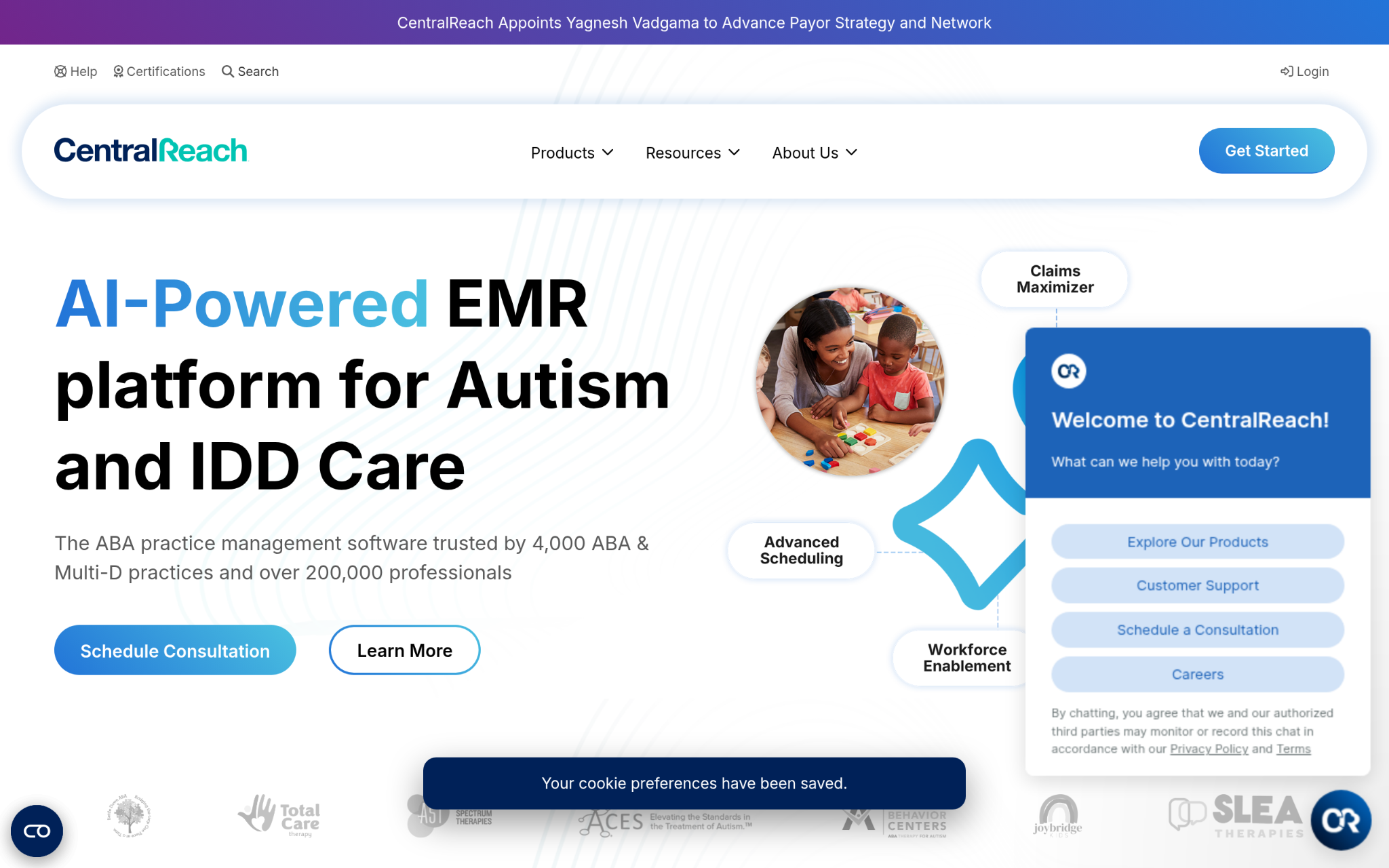
How Does CentralReach Operate?
CentralReach, founded in 2012 and headquartered in Fort Lauderdale, Florida, is the largest platform in this roundup by reach, serving 4,000 ABA and multi-disciplinary practices and more than 200,000 professionals. The platform is an end-to-end system covering practice management, clinical data collection, scheduling, care team management, and billing services. Their proprietary AI, called cari, was trained on over a billion data points in collaboration with 40+ BCBAs, which puts a different kind of intelligence behind scheduling and clinical outcome work than most competing platforms can offer right now.
Why Does CentralReach Stand Out for ABA Software Platforms?
CentralReach addresses the fragmentation problem at enterprise scale, particularly for practices that serve autism and IDD populations across multiple sites and care teams. That depth of specialization, combined with AI trained on behavioral health data, positions it well for organizations where generic scheduling and billing tools consistently fall short.
What Users Are Actually Saying:
Forty-plus awards including Deloitte Technology Fast 500 and Inc. Magazine’s Best Places to Work in America reflect an organization that’s building something real, not just winning marketing accolades. The size of the user base (200,000+ professionals) means the platform has been stress-tested at a scale few others have matched. Practices evaluating enterprise-level platforms consistently put CentralReach on the shortlist, and the recognition history backs up why.
Methodology Behind These Picks
Gathering the Raw Data
The initial list was built by pulling from multiple sources at once: ABA-specific software directories, behavioral health review platforms, published case studies, and the official websites of platforms actively marketed to ABA and IDD care providers. The goal at this stage was breadth, capturing as many platforms as possible before applying filters. Products that appeared across multiple independent sources were flagged for closer review, while platforms with minimal third-party presence were noted but deprioritized early.
The Shortlist Cut
From the broader pool, options without verifiable real-world usage in behavioral health settings were removed. Review patterns were analyzed across multiple platforms to identify consistency, because a strong average rating built on a thin review base tells a very different story than the same rating built across hundreds of verified users. Platforms where the review content didn’t clearly reflect ABA-specific workflows (authorization management, session data collection, clinical billing) were cut at this stage, regardless of overall scores.
Fact-Checking the Picks
Claims made on official company websites were cross-referenced against independent review sources and published case studies. Where a company described specific clinical or billing capabilities, those were checked against what actual users reported in their reviews. Gaps between what a platform markets and what users consistently experience were treated as meaningful signals. Only platforms where the real-world feedback lined up reasonably well with stated capabilities moved forward.
Authority Signals and Industry Standing
Each remaining platform was evaluated for third-party recognition: industry awards, coverage in behavioral health publications, original research published by the company, and documented partnerships with recognized organizations in the ABA space. This step matters because it separates platforms that have been validated by the broader professional community from those that exist primarily in self-promotional channels. Companies with multiple independent authority signals across different source types scored higher in this dimension.
ABA Software Platforms Track Record
The final filter focused on demonstrated performance in the ABA software space. Platforms were checked for dedicated service pages covering ABA-specific features, verified reviews from BCBAs, RBTs, and practice administrators, and case studies documenting measurable results in areas like billing accuracy, session documentation, and authorization management. General-purpose practice management tools that had been adapted for ABA use were treated differently from platforms built for this market from the ground up.
Picking the Right ABA Software Platforms for You
Choosing the right platform comes down to what your practice actually needs right now versus what it will need in twelve months. Here’s how to think through the main decision points:
- Industry and Domain Experience: Look for platforms that were built for ABA and behavioral health workflows, not adapted from general medical practice management tools. Purpose-built platforms understand authorization cycles, BACB documentation requirements, and payer-specific billing rules without requiring workarounds.
- Features and Service Options: Match the feature set to your team’s daily workflow. A solo BCBA needs different tooling than a multi-site organization with a billing department. Check whether data collection, scheduling, billing, and progress reporting are genuinely connected or just bundled separately.
- Pricing Structure: Per-client, per-therapist, and unit-based models all produce different cost curves as your caseload grows. Run the numbers against your current volume and your projected growth before committing.
- Results Measurement: Strong platforms give you real visibility into clean claims rate, session note completion timelines, authorization utilization, and treatment goal mastery. If a platform can’t surface those metrics easily, that’s a meaningful limitation.
- Industry Knowledge and Compliance: HIPAA and Medicaid billing compliance, along with BACB ethical guidelines, aren’t optional. Confirm that the platform’s compliance infrastructure is current and actively maintained, not just a checkbox from the initial build.
The Verdict
Billing and revenue cycle performance in ABA practices comes down to how well clinical documentation and billing workflows talk to each other. The platforms covered here each solve that problem at different scales and price points. Theralytics and Raven Health fit growth-focused practices well. Rethink and CentralReach suit larger or more complex organizations. ABA Matrix earns its place for practitioners who want focused, compliant tooling without enterprise-level overhead. The space is maturing fast, and the platforms keeping pace are the ones worth betting on.

MindOwl Founder – My own struggles in life have led me to this path of understanding the human condition. I graduated with a bachelor’s degree in philosophy before completing a master’s degree in psychology at Regent’s University London. I then completed a postgraduate diploma in philosophical counselling before being trained in ACT (Acceptance and commitment therapy).
I’ve spent the last eight years studying the encounter of meditative practices with modern psychology.