
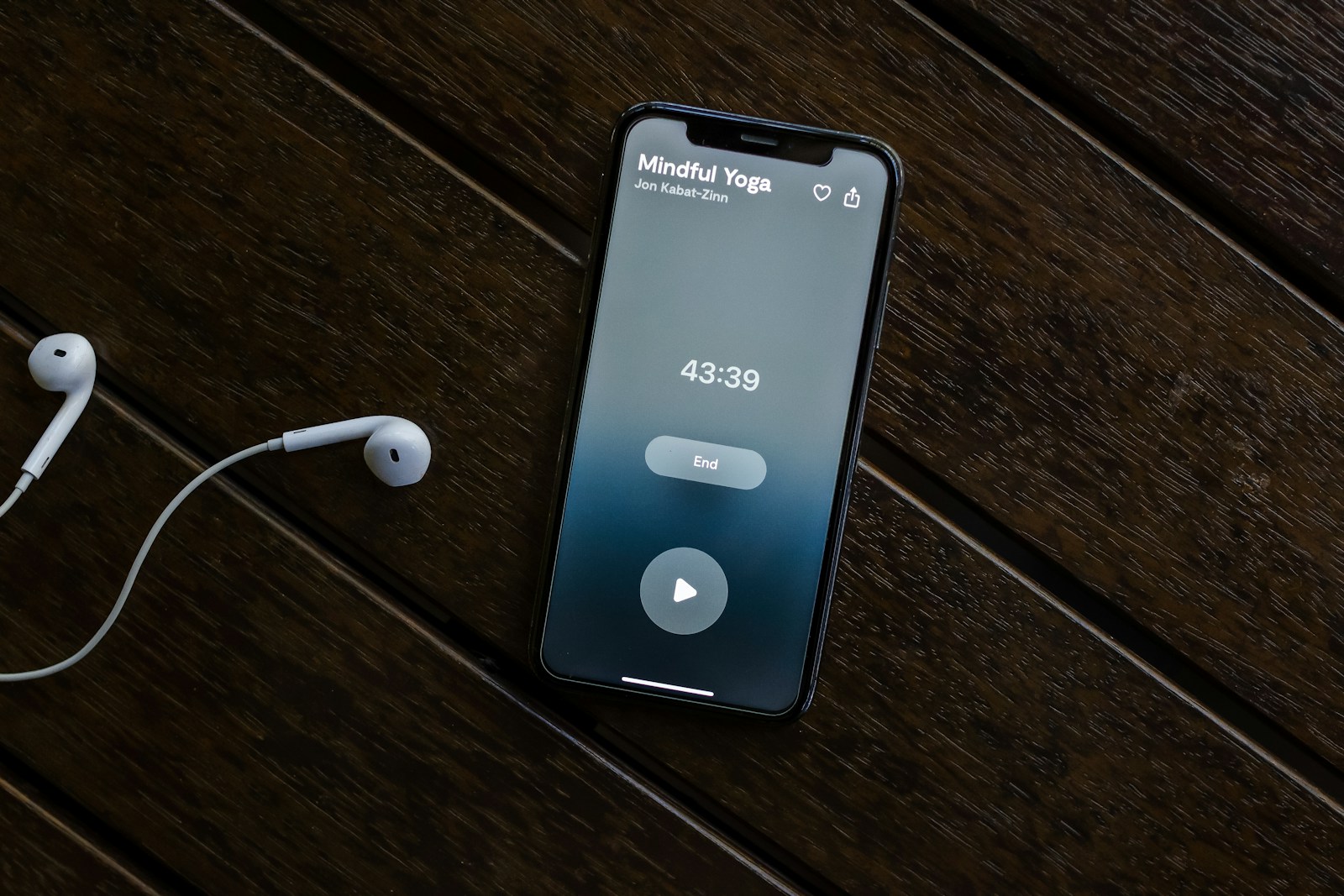
If you open a meditation app at eleven at night and still feel awake twenty minutes later, the problem might not be your practice. It might be the choosing. A screen full of titles asks you to make a decision at exactly the hour when deciding is hardest, and that decision is often the thing that keeps you sitting up in bed with the light on.
I spent about two years waking at three in the morning. Not every single night, but most of them. I tried the apps. They were well made and full of good material. Each one handed me a library, and I never chose from it. I scrolled. I read descriptions. I compared a twenty minute body scan against an eight minute breath practice and a sleep story I had already half heard. Then I put the phone down and lay there, more awake than when I picked it up.
I am not a doctor and not a clinician. What follows is what I found out the slow way, and what I think is worth knowing if you already have a practice and it somehow stops working at bedtime.
Choosing is a task, and bedtime is a bad time for tasks
During the day, choice is fine. You have capacity. You can weigh two options and pick one and move on. By late evening most of that capacity is spent. You have made hundreds of small decisions already and the ones left over are the ones you have been avoiding.
A library asks for a decision with a right answer. Which practice suits tonight? You do not know, because you do not have a clean readout of your own state. So you guess, and then you second guess, and the guessing itself becomes a kind of alertness. You are now assessing yourself, comparing, and holding your phone at full brightness while you do it.
There is a second cost, subtler. When you pick your own practice you also own the outcome. If it does not settle you, you conclude you picked wrong. Next night you take the choice more seriously, which makes it heavier, which makes you more likely to skip it.
Why one practice, handed to you, lands differently
A single short practice removes the whole first step. You are not selecting, you are starting. Nothing to compare against, so nothing to regret.
It also changes the relationship to the practice. When you did not choose it, you cannot have chosen wrong. The practice is just what tonight is. That sounds like a small shift and in my experience it is not. It takes the evaluating mind out of the process and leaves you with something to do.
And one is enough. Twelve minutes of one thing, done most nights, does more than an ambitious thirty minutes you attempt twice and then abandon. Repetition matters more than range. If you already meditate, you know this from your sitting practice. The same logic holds after dark.
What that one practice can actually look like
Here are practices small enough to be the whole of your evening. Pick one, not several, and use the same one for a week or two before you change anything. If something feels uncomfortable, stop and rest in your usual way.
A slightly longer out-breath. About four seconds in through the nose, about six seconds out. No holds. Do not force the last of the air out. The out-breath should feel like letting a door swing shut rather than pushing it. Ten or twelve rounds, then stop counting and lie still.
An easy, even breath. Five seconds in, five seconds out. The instruction people get wrong is size. These are not bigger breaths. They are ordinary breaths, timed. If you feel any strain, you have made them too large.
Gently tense, then let go. Take one area, say both hands. Tighten with mild effort, nothing like maximum, for about five seconds. Then release and leave it alone for fifteen or twenty seconds. Keep breathing normally throughout, no breath holding. Move on: hands, shoulders, jaw, feet. Four areas is plenty.
Noticing the body without fixing it. A slow pass of attention through contact points. Heels on the mattress, calves, backs of the thighs, the length of the back where it meets the bed, hands wherever they are, the jaw. You are not hunting for tension. If you find some, you leave it there and carry on. That last part is the practice.
A quiet hum. On a few comfortable out-breaths, make a low hum. Quiet enough that someone in the next room would not hear it. You will feel it in the face and chest. Five or six out-breaths, then let the breath go back to normal and lie there.
A resting hand. One hand resting lightly on the opposite upper arm, elbow supported by the bed or a pillow so nothing has to be held up. No pressure. Just weight and warmth where they are.
Giving up the goal. Lie there and deliberately stop checking whether it is working. No noticing whether you feel calmer. No assessing how close sleep might be. This is the hardest of the seven and often the one that matters most, because the checking is itself a form of staying awake.
The step that does not happen
Knowing these practices is not the issue. You probably knew most of them already. The step that does not happen is choosing one at eleven at night.
You can solve that cheaply. A free timer app and a note on paper saying which practice you are doing this week works. A single saved recording, one you like, queued up so there is nothing to browse, works too. I built Wind Down Daily because neither of those adapted to the night I was actually having. It gives one practice a night, around twelve minutes, based on three taps before bed: how you slept, how tense you feel, how much energy is left. The practice opens straight after, with one line saying why that one. Voice guided, made for a dark room with the screen off. If you want to see how the pieces fit together, I have written up a twelve minute evening routine you can copy without the app. iOS and Android.
Whatever you use, the principle is the same. Decide once, in daylight, and let the evening be about doing rather than choosing.
When this is not enough
None of this replaces medical advice. If you are waking most nights for weeks on end, if you are exhausted during the day in a way that affects work or driving, if you snore heavily or wake gasping, if your mood has dropped, or if you are lying awake with thoughts you cannot put down, talk to your GP or doctor. There are things worth ruling out that a breathing practice cannot touch, and a short conversation is a reasonable place to start.

MindOwl Founder – My own struggles in life have led me to this path of understanding the human condition. I graduated with a bachelor’s degree in philosophy before completing a master’s degree in psychology at Regent’s University London. I then completed a postgraduate diploma in philosophical counselling before being trained in ACT (Acceptance and commitment therapy).
I’ve spent the last eight years studying the encounter of meditative practices with modern psychology.