
Home safety is not about limiting independence. It is about making everyday routines more comfortable, predictable, and easier to manage. A few thoughtful changes can reduce common hazards while helping an older adult continue living confidently in a familiar space. For people who may not be able to reach a phone quickly after a fall, fall detection devices can also be one part of a broader emergency plan.
The best approach is practical and personal. A home that works well for one person may create challenges for another because mobility, vision, hearing, balance, medication routines, and daily habits can change over time. Review the home after a fall, an illness, surgery, a hospital stay, or a noticeable change in strength or confidence.
Why Home Safety Deserves A Fresh Look
A familiar home can still become harder to navigate. A once-manageable dim hallway may become risky at night. A favorite rug may shift underfoot. Reaching into a low cabinet, stepping into a tub, or carrying laundry downstairs can become more difficult when balance or flexibility changes. The goal is not to remove every challenge from life. It is to reduce preventable risks that make ordinary tasks harder than they need to be.
Falls are often caused by a combination of factors, including environmental hazards, medications, health conditions, and changes in vision or strength.
How To Complete A Room-By-Room Safety Check
Start by walking through the home during normal activities, such as getting out of bed, making coffee, bathing, taking out trash, and going to the mailbox. Do the review in daylight and again after dark. Look for places where a person must twist, reach, bend, step over something, or move quickly to answer a phone or door.
- Write down every concern before trying to solve it.
- Label each item urgent, important, or lower priority.
- Complete easy, low-cost fixes first.
- Focus on paths used every day, especially routes to the bathroom, kitchen, bedroom, and exits.
- Ask for professional advice when mobility equipment or structural changes are involved.
Living Room, Hallway, And Floor Safety
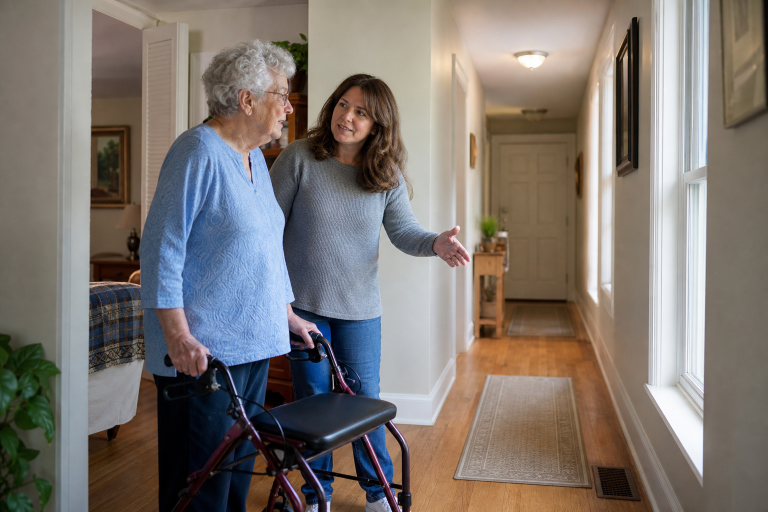
Walking paths should be wide enough for a cane, walker, wheelchair, or a steady companion walking beside the resident. Remove or secure loose rugs with appropriate non-slip backing. Keep cords, shoes, pet toys, baskets, and small furniture out of travel paths. Repair raised carpet edges, uneven flooring, and loose thresholds.
A hallway can look neat but still be unsafe if a laundry basket, pet bed, or decorative table narrows the route. Place frequently used items at an easy-to-reach height, and improve lighting near doorways, hallways, and changes in floor level. Motion-activated lights can be particularly helpful for nighttime movement.
Bathroom Safety Checks
Bathrooms deserve early attention because wet floors, tight turning spaces, and transfers in and out of a tub or shower require balance. Use non-slip surfaces in bathing areas, keep towels and toiletries within reach, and add a night-light for evening trips. A stable shower chair may help someone who tires easily while bathing.
Grab bars near the toilet and bathing area should be installed securely and professionally when possible. Towel bars and suction-mounted accessories are not reliable substitutes for weight-bearing support. Also, check that the bathroom door can be opened easily in an emergency.
Bedroom And Nighttime Safety
Keep a lamp, phone, flashlight, glasses, hearing aids, and mobility aid within easy reach of the bed. Clear clothing, footwear, cords, and other objects from the floor. The route to the bathroom should have consistent lighting, and the bed height should allow the person to sit down and stand up without excessive effort.
Prepare for power outages by keeping a charged phone, flashlight, and essential medications accessible. A simple nighttime routine can prevent rushed decisions when someone wakes disoriented or needs help.
Kitchen And Stairway Safety
Kitchen Checks
- Store everyday dishes, food, and cookware between waist and shoulder height.
- Clean spills immediately and avoid loose floor mats.
- Use stable seating for food preparation if standing is tiring.
- Turn pot handles away from the stove edge.
- Test smoke alarms and carbon monoxide alarms regularly.
Stairway Checks
- Keep every step clear and well-lit.
- Make sure handrails are secure, easy to grip, and available where needed.
- Repair loose carpet, damaged treads, and uneven surfaces promptly.
- Avoid carrying loads that block the view of the steps.
Emergency Planning And Access To Help
Post emergency contacts and the home address near each phone. Keep an updated medication list and key health information where a trusted family member can find it. Make sure entrances and pathways are accessible for emergency responders, and arrange regular check-ins with a neighbor, friend, or relative.
When To Request A Professional Home Assessment
A family walkthrough may not be enough after a recent fall, repeated near-falls, new weakness, dizziness, memory concerns, or difficulty bathing, dressing, climbing stairs, or getting out of bed. Ask a doctor, occupational therapist, physical therapist, or another qualified professional for guidance when choosing or using a cane, walker, shower chair, grab bar, or larger home modification.
A Simple 30-Day Home Safety Plan
- Days 1 to 3: Walk through the home and list hazards.
- Days 4 to 7: Clear clutter, cords, loose rugs, and blocked routes.
- Week 2: Improve lighting in bedrooms, hallways, bathrooms, and stairways.
- Week 3: Address bathroom support, stair rails, alarms, and kitchen storage.
- Week 4: Finalize emergency contacts and review the changes with someone trusted.
Common Questions About Senior Home Safety
How Often Should A Home Safety Check Be Completed?
Review the home at least once a year, and sooner after a fall, illness, surgery, medication change, or change in mobility.
What Is The First Safety Fix To Make?
Start with the most immediate risk, such as a blocked walkway, a loose rug, poor nighttime lighting, a slippery bathroom surface, or an unstable stair rail.
Do Changes Need To Be Expensive?
No. Clearing pathways, improving organization, moving commonly used items, and adding lighting can make a meaningful difference. Larger modifications should be driven by an actual need.
Conclusion
A safer home is built through practical details: clear floors, good lighting, secure bathrooms, accessible emergency information, and regular review. Small changes completed over time can protect confidence and independence while keeping the home comfortable and familiar.

MindOwl Founder – My own struggles in life have led me to this path of understanding the human condition. I graduated with a bachelor’s degree in philosophy before completing a master’s degree in psychology at Regent’s University London. I then completed a postgraduate diploma in philosophical counselling before being trained in ACT (Acceptance and commitment therapy).
I’ve spent the last eight years studying the encounter of meditative practices with modern psychology.