
A messy workspace isn’t just an eyesore, it actively fights against your painting. You waste time hunting for the right color, knocking over tiny pots, and losing your place on the canvas. That’s genuinely frustrating, especially when you sat down to unwind.
The good news is that a few simple habits can keep everything in order from session to session. These seven tips for keeping your paint by numbers workspace organized will save you time, protect your supplies, and make the whole experience more enjoyable.
Set Up a Dedicated Painting Area
Paint by numbers projects for beginners have a tendency to spread across whatever surface happens to be nearby, which is exactly why picking a fixed spot matters right from the start. Returning to the same place each session keeps your setup consistent and stops supplies from wandering into other rooms. Starting with paint by numbers for beginners that include pre-printed canvases and organized paint sets helps you sidestep the clutter that piles up when materials arrive in random packages from multiple sources.
Your dedicated area doesn’t need to be big. A desk corner, a folding table near a window, or even a sturdy TV tray can do the job, provided you keep it reserved strictly for painting. Don’t let paperwork, meals, or other hobbies creep onto it.
Place a plastic mat or silicone sheet on the surface. Paint drips happen, and protecting your table from stains means you won’t dread the cleanup that follows each session.
Sort Your Paints Before You Start
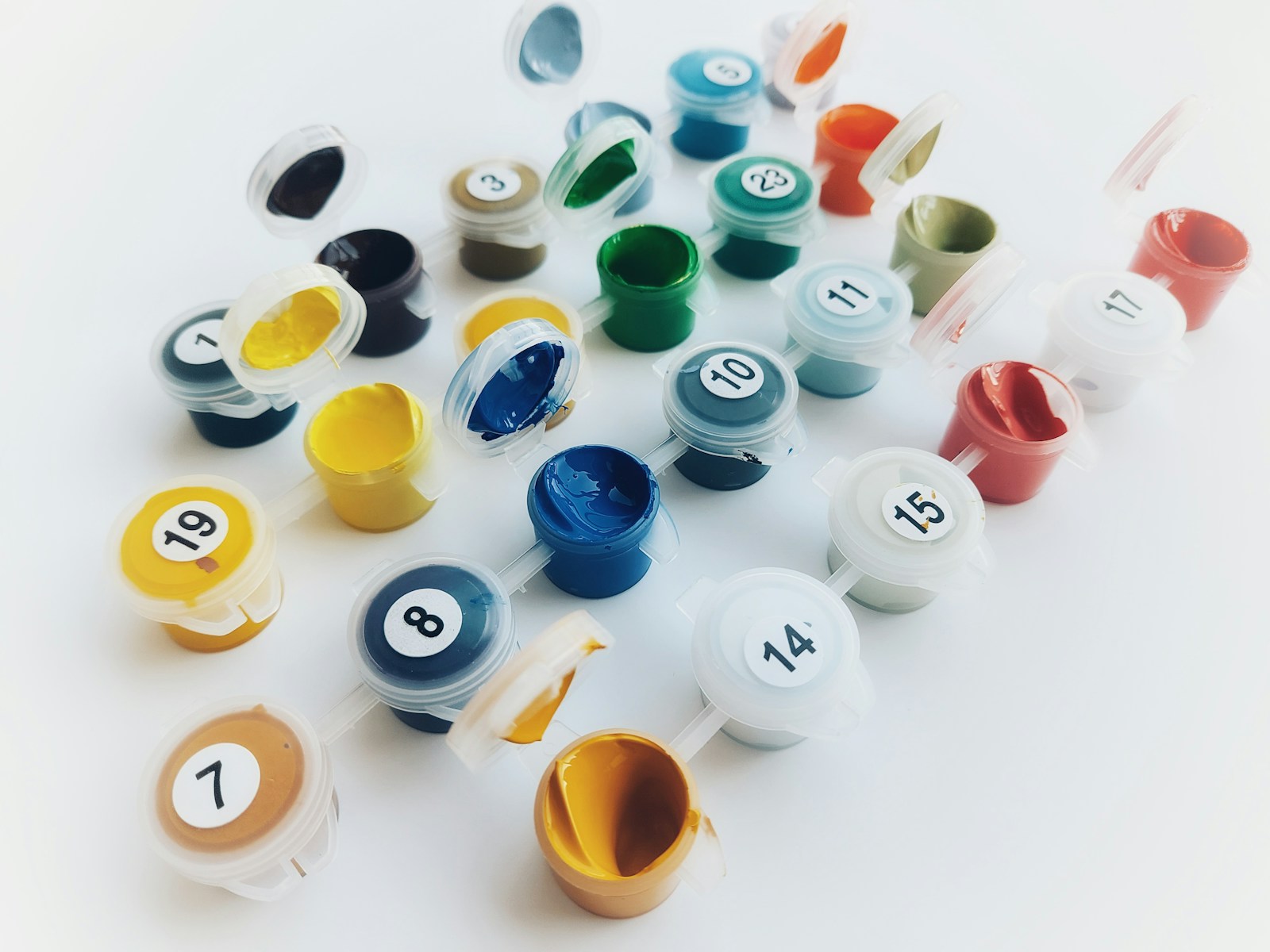
Digging through thirty nearly identical pots mid-session wrecks your concentration. Spend five minutes before you open the canvas sorting your paints by number or color group. You’ll grab what you need without second-guessing which pot is which.
A simple egg carton works as a free sorting tray for sessions with a limited palette. For larger projects, a tackle box or a small hardware organizer with individual compartments keeps every pot visible and easy to grab.
One rule that spares a lot of frustration: return each pot to its designated slot right after you use it. It sounds simple, but the habit is easy to skip when you’re deep in a flow state. Build it in early, and it’ll become automatic.
Use Small Containers to Prevent Spills
Paint by numbers kits typically include paint in small, sealed jars. But once they’re open, a careless knock sends paint spreading across your canvas and table. A cheap fix is a non-slip silicone mat or a bead organizer tray that keeps open pots upright while you work.
If you decant paint into a palette dish for a session, use one with individual wells separated by raised ridges. These aren’t expensive, and they keep colors from bleeding into each other if a brush carries moisture between wells.
Keep a small cup of clean water nearby for rinsing, and a folded paper towel underneath it. Wet rings on your work surface cause the canvas to buckle if you’re not careful about where moisture lands.
Keep Your Reference Image Within Easy Reach
Most kits include a printed reference image showing which colors correspond to which numbered zones. If that image ends up buried under supplies or folded awkwardly, you’ll constantly pause to locate it, and that interrupts your rhythm.
Clip the reference sheet to a small clipboard and prop it upright against a cup or a box. You can also fold a piece of cardboard into a triangle stand and lean the image against it. Keep it at eye level so you never have to pick it up mid-stroke.
And if you prefer a digital version, prop your phone or tablet at a comfortable angle and keep the screen from locking during your session. A few extra seconds of waiting for your device to wake up adds up over a two-hour painting block.
Label Everything Clearly
After a few sessions, the numbers printed on paint pot lids can smear, fade, or become genuinely difficult to read under dim lighting. A paint marker or a strip of masking tape on each lid, written clearly with a permanent marker, solves this before it becomes a problem.
Label the outside of any storage container you use, too. If you keep session supplies in a Ziploc bag or a small bin, mark it with the project name or number. When you come back to a paused project weeks later, you won’t have to puzzle out which supplies belong to which canvas.
Don’t skip this step because it feels like overkill. Relabeling smudged pots mid-session is exactly the kind of small interruption that turns a relaxing hobby into a chore.
Clean Your Brushes the Right Way
Dried paint on a brush ruins its tip, and a damaged brush makes fine detail work genuinely harder. So clean your brushes thoroughly after every session, not just a quick rinse between colors.
Rinse each brush in clean water, blot it on a paper towel, and let it dry with the bristles pointing up or horizontal. Never store a wet brush bristle-down in a cup, as the bristles splay outward and never fully recover their shape.
Between colors during a session, a quick wipe on a damp cloth or paper towel is enough. You don’t need to fully rinse the brush every single time. Here’s the key distinction: a proper clean at the end of each session, and a light wipe between colors while you’re actively working.
Store Unfinished Projects Safely
Life interrupts. You won’t always finish a canvas in one sitting, and that’s completely fine, as long as you store your unfinished work in a way that protects both the canvas and your open paint pots.
Lay the canvas flat in a clean, dry spot away from direct sunlight. If you cover it, reach for wax paper rather than plastic wrap. Plastic can bond to acrylic paint and lift sections right off when you pull it away.
Seal any open paint pots before you pack up. A small piece of plastic wrap pressed over the opening – before the lid goes on – stops the paint from skinning overnight. If a pot does skin over, peel the dried layer off gently with a toothpick; the paint underneath is usually still perfectly usable.
Conclusion
Staying organized isn’t about being a perfectionist. It’s about removing friction so you can focus on the actual painting. A fixed workspace, labeled supplies, and a few end-of-session habits make a real difference in how much you enjoy each project. These tips for keeping your paint by numbers workspace organized work whether you’re a first-time painter or someone returning to the hobby after years away. Start with one or two changes and build from there.

MindOwl Founder – My own struggles in life have led me to this path of understanding the human condition. I graduated with a bachelor’s degree in philosophy before completing a master’s degree in psychology at Regent’s University London. I then completed a postgraduate diploma in philosophical counselling before being trained in ACT (Acceptance and commitment therapy).
I’ve spent the last eight years studying the encounter of meditative practices with modern psychology.