
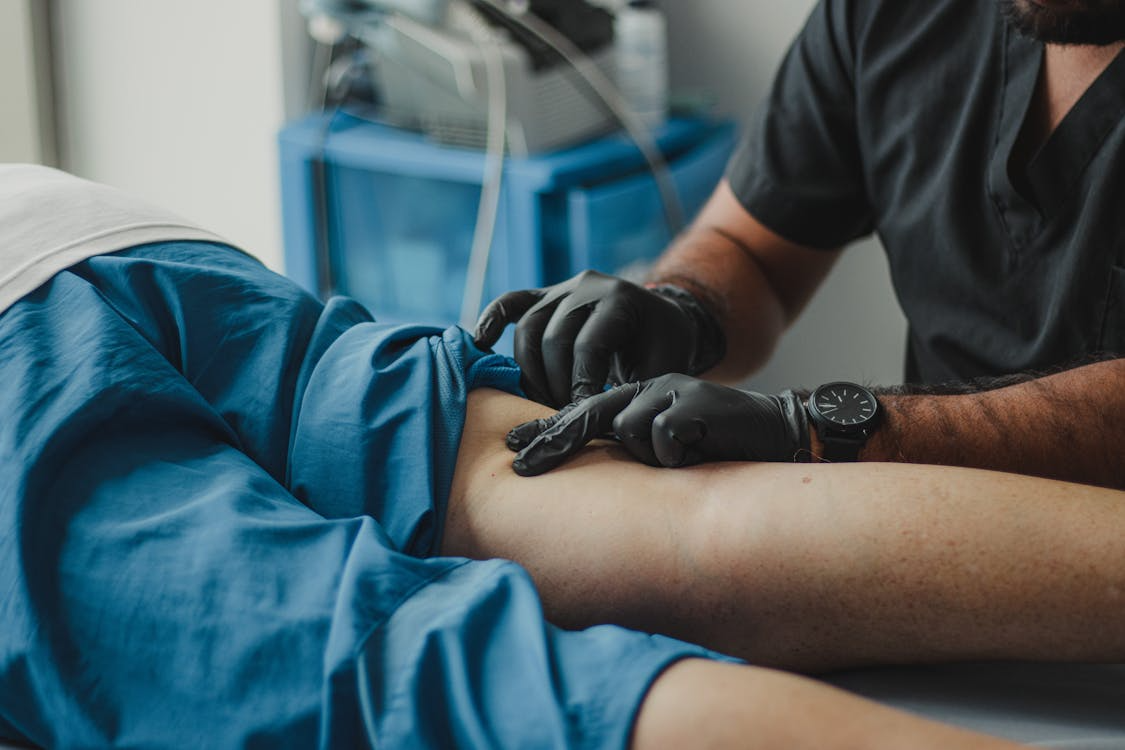
https://www.pexels.com/photo/patient-during-treatment-13538708
Want to know exactly what to expect before going under the knife?
Liposuction is currently the most popular cosmetic procedure in the United States. You can understand why. It eliminates fat that just won’t go away with diet and exercise.
But here’s what most people don’t stop to think about…
The prep, surgery day itself and recovery timeline are all huge factors in the outcome. Mess up any one of these and you’ll notice it in your results.
This Guide will cover the process from start to finish… beginning with the Consultation all the way to completed, “Paid In Full” results.
What’s Inside This Guide:
- What Is a Liposuction Procedure?
- How to Prepare (The Right Way)
- What Happens on Surgery Day
- The Recovery Timeline — Week by Week
- Tips to Speed Up Healing
What Is a Liposuction Procedure?
Liposuction is a cosmetic surgery used to suction out unwanted fatty deposits from particular areas of the body.
Think of it as targeted fat removal…
It is not a substitute for living a healthy lifestyle. However, it can target problem areas that won’t go away no matter how healthy you live. Areas that are commonly treated are:
- Abdomen and flanks
- Thighs and buttocks
- Arms and back
- Chin and neck
- Chest area
349,728 US procedures in 2024 were performed, making liposuction the most popular cosmetic procedure for the third consecutive year. (American Society of Plastic Surgeons)
If you are truly thinking about undergoing this procedure, the most crucial decision you will make is selecting a board-certified plastic surgeon to perform your liposuction. The skill and experience of the surgeon will determine how safe and comfortable you are as well as the quality of your end result.
How to Prepare for a Liposuction Procedure
Preparation matters more than most people realise.
You will meet with the surgeon prior to surgery day. They will evaluate areas to be treated, go over medical history and discuss realistic expectations of what can be done.
Here’s what happens during the prep phase:
- Blood tests and a full physical examination
- Review of current medications (some must be paused before surgery)
- Stopping smoking at least 4-6 weeks before the procedure date
- Avoiding blood-thinning medications like aspirin or ibuprofen
- Arranging a ride home — driving is not permitted directly after surgery
The surgeon will take photos of the treatment areas and mark you. The marks help guide him during surgery and allow for an exact before/after record.
Don’t skip this step. Detailed pre-op consultation lays the groundwork for hassle-free surgery and quick recovery.
What Happens on Surgery Day
Getting Surgery Day jitters? Learn what to expect before your day at the hospital and it’ll be a breeze.
Here’s how a typical liposuction procedure works, step by step.
1. Anesthesia
Treatment begins under local anesthesia or general anesthesia based on the areas treated and patient preferences. The doctor will advise which method is safest for your individual case.
2. Tumescent Fluid Injection
Tumescent solution is injected into the area being treated. This fluid (saline solution, local anesthetic, and adrenaline) will numb the area, limit blood loss and allow fat to be removed much more efficiently.
3. Small Incisions
Very small incisions are made, typically only a few millimetres wide. These will usually be placed as close to the treatment area as possible in order to keep any potential scarring minimal.
4. Fat Removal
A thin hollow tube known as a cannula is inserted through the incisions. The surgeon manipulates it in a back-and-forth motion. This ruptures fat cells which are suctioned out of the body.
5. Closing Up
Incisions are either closed or left partly open to permit drainage of residual fluid. An elastic compression garment is applied immediately to help heal the tissue and reduce swelling.
The whole procedure typically takes 1-3 hours depending on how many areas are treated.
The Liposuction Recovery Timeline
This is the part most people underestimate…
Things don’t get back to normal after liposuction overnight. It takes months. Here’s what to expect, step-by-step.
Week 1-2: The Hardest Part
The first two weeks are the most physically uncomfortable.
Extensive swelling, bruising, and tenderness is totally normal. The treated areas will appear and feel much more swollen than expected — and that surprises most people.
What to focus on:
- Rest as much as possible in the early days
- Wear the compression garment exactly as directed (this is non-negotiable)
- Take prescribed medication to manage discomfort
- Take short, gentle daily walks to keep circulation moving
The majority of patients resume work at a desk job in 5-7 days. Physically active work requires a greater recovery period before returning.
Weeks 2-6: Turning a Corner
This is where recovery starts to feel manageable again.
Bruising and swelling start to go away. Normal life starts becoming the routine. You can typically exercise lightly by weeks 2-3. Please consult your surgeon before engaging in any exercise.
A complication rate of just 2.62% was found in a 2024 meta-analysis of almost 30,000 patients. This large pool of data confirms that liposuction is safe when conducted in the proper setting.
By week four everything mundane seems easy peasy and clothes start fitting way differently.
Still avoid during this phase:
- High-impact exercise or sport
- Heavy lifting of any kind
- Direct sun exposure on treated areas
2-6 Months: Final Results Coming Through
Here’s where the real transformation becomes visible.
Two months. You will see about 70-80% of your end result. Swelling continues to subside as residual swelling decreases. Your body continues to mold as tissues conform to their new location.
Results will most likely continue to finalize between 6-12 months after your procedure. It’s a long time — but that is completely normal.
Tips to Speed Up Recovery
Recovery isn’t just about waiting around…
Choices you make during recovery can have a tangible impact on how long recovery takes and the quality of the end product:
Drink water. Hydration reduces swelling and promotes healing at the cellular level.
- Eat a low-sodium diet — sodium causes fluid retention, which directly prolongs swelling
- Wear your compression garment all the time — one of the biggest mistakes during recovery is neglecting the compression garment
- Avoid alcohol — it thins the blood and slows the healing process significantly
- Never miss a follow-up appointment — your surgeon needs to monitor your progress at each stage
They’re not frills. They are what separate the best result from the mediocre one.
The Big Picture: Everything That Matters
Learning what to expect during the entire liposuction process, including before, during and up to 6 months after surgery, can help you feel more comfortable about undergoing the procedure.
To quickly recap:
- Prepare thoroughly and follow every pre-op instruction
- Surgery day follows a clear, structured 5-step process
- Weeks 1-2 of recovery are the hardest part
- Final results take 6-12 months to fully appear
- Post-op care matters just as much as the surgery itself
Pick a board certified plastic surgeon, don’t rush your recovery, and let the results do the talking.

Our own struggles in life have led us to this path of understanding the human condition. United by a shared curiosity for the mind and what it means to be human, we’ve each walked a journey shaped by personal challenges and a deep interest in helping others grow. Over the last eight years, our work has centred on exploring how meditative practices meet modern approaches to psychological wellbeing.