
They started coming in their late forties. One week, every February, the same stretch of coast.
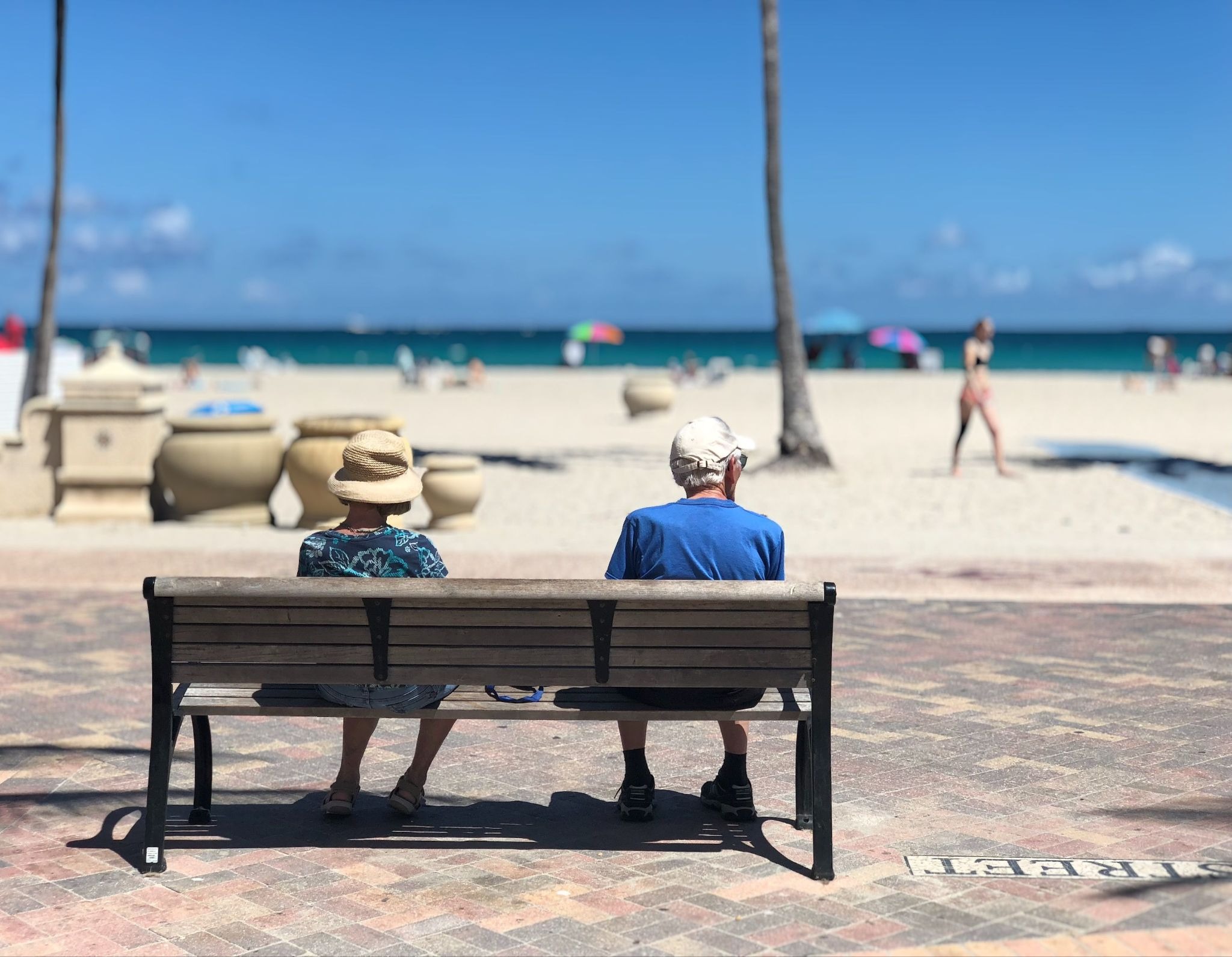
Photo by Monica Silvestre: https://www.pexels.com/photo/man-and-woman-sitting-on-brown-wooden-bench-1034597/
Now they’re sixty-three. The rental car counter knows them. They have a favorite bench, a favorite early-morning walk, a place where they always eat on the last night and feel sad.
And somewhere around year eleven, a new sentence entered the conversation. Usually on the flight home, usually half-joking.
What if we just stayed?
Not as a young person’s adventure. As a final chapter. Somewhere unhurried to spend whatever time is left.
It’s one of the most common daydreams in later life, and it deserves better than either encouragement or dismissal. So let’s do the arithmetic honestly.
The Number That Makes the Case
Start with the strongest argument, because it’s a good one.
Hawaii has the highest life expectancy in the United States. But the more relevant figure isn’t life expectancy at birth — it’s life expectancy at sixty-five, which is the number that actually applies to someone making this decision.
By that measure, Hawaii leads the country. A person reaching sixty-five there can expect 20.5 additional years, according to CDC state life tables. In West Virginia, the lowest, it’s 16.6.
Nearly four years of difference.
Some of that is who already lives there rather than the islands themselves. But not all of it. Year-round outdoor movement, a food culture built around fish and produce, low smoking rates, and social structures that keep older people embedded in family life are real things, and they compound.
There’s also something harder to measure. Places with mild weather remove the small daily frictions that quietly shrink an older person’s world — the ice on the path, the four months indoors, the winter where you stop going out because going out is a project.
If the question is would this be good for us, the honest answer is: possibly, yes.
Now the parts people skip.
The Move Itself Is Different at Sixty-Eight
At thirty, you move yourself. Friends, a truck, pizza afterward.
That is not what this is.
Everything crosses an ocean in a container. Furniture gets disassembled, wrapped, loaded, shipped, and reassembled weeks later on the other side. There’s no driving back for the box you forgot.
Most people also don’t buy immediately. They rent first — which is the right call at any age and especially this one — which means the bulk of a household goes into storage for months while they work out which side of the island they actually want.
Here’s the part that catches people. The hardest work isn’t logistical. It’s deciding what doesn’t come.
A container has a finite volume, and sixty-eight years of accumulated life does not fit inside it. Every object becomes a small decision, and those decisions land under time pressure. That’s where the regret tends to live — not in the move, but in the week before it.
Which is a practical argument for handing the physical part to people who do it constantly. A Maui moving company such as Wailea Movers handles inter-island and mainland relocations as routine work, and long-distance movers who ship to the islands will walk through the sequence before you commit — container timelines, what’s worth shipping versus replacing, how storage fits between renting and buying.
Getting that walkthrough early is worth doing even if you’re only half serious. It converts a daydream into numbers, and numbers are easier to think with.
The Thing Nobody Weighs Until They Need It
This is the part that changes the calculation most, and it’s the part almost nobody researches before the flight home.
Health care access on the neighbor islands is thin.
Hawaii is short hundreds of physicians statewide. And according to a 2026 report from the University of Hawaiʻi’s medical school, Maui has the worst primary care shortage of any county in the state — short by 45 primary care doctors, needing to grow that workforce by 35% just to meet current demand.
More than double the statewide shortfall.
Specialists are scarcer still. Patients regularly fly to Oʻahu for specialty care, and increasingly for basic primary care. Insurance often doesn’t cover the travel.
In your fifties, this is an abstraction. In your late seventies, when you’re managing two or three chronic conditions and seeing specialists on a schedule, it becomes the organizing fact of your life.
That doesn’t rule it out. Plenty of people manage it. But you’d want to know, before you go, exactly which of your current doctors has an equivalent on that island — and how long the wait is.
Ask that question at year eleven, not year twenty.
Who Shows Up on a Tuesday
The other cost is quieter and shows up later.
Right now, your life is held up by a network you probably can’t see, because it’s been there so long. The friend who drives you to a procedure. The neighbor who notices the mail piling up. The adult child two hours away rather than six hours and an ocean.
Retirement relocation research keeps finding the same thing: the move usually works well while both partners are healthy and mobile. It gets hard when one of them isn’t.
An island is a wonderful place to be well. It’s a complicated place to be unwell and far from everyone who loves you.
So the real question isn’t can we afford it. It’s who is our person here, and would they still be our person at eighty-two?
Some people have a genuine answer. A sibling already there. A church, a community, fifteen years of real friendships built on those annual trips. That answer changes everything.
If the honest answer is we’d figure it out — sit with that a while longer.
What You’re Actually Comparing
One last piece of self-honesty.
When you weigh island life against your current life, you’re comparing your best week there against your average Tuesday at home.
Psychologists named the error. In a 1998 study, Schkade and Kahneman asked students in the Midwest and Southern California to rate their own life satisfaction, then predict a similar person’s satisfaction in the other region.
Both groups expected Californians to be happier. Reported satisfaction was identical.
Climate mattered enormously when imagining someone else’s life elsewhere. It barely registered in people’s assessments of their own. They called it the focusing illusion: vivid, easily pictured differences get far more weight in prediction than they carry in practice.
The ocean is doing a lot of work in your mental model. It will do less once it’s the view from the kitchen.
Worth pairing with the ledger. Hawaii’s cost of living runs 84% above the national average — the highest of any state — which lands differently on a fixed income than on a salary.
The Trip That Actually Answers It
If you’re serious, take one trip that isn’t a holiday.
Go in low season. Rent an ordinary place in a neighborhood where people live year-round. Cook. Do a Tuesday.
Then do the unglamorous errands. Call a primary care practice and ask whether they’re accepting new patients, and how long the wait is. Price a week of groceries. Drive to the hospital and time it.
Sit through an afternoon with nothing planned and notice whether it feels like peace or like being far away from everything.
Fifteen Februaries told you that you love it there. That was never in question.
This is a different question, and it deserves its own week.

MindOwl Founder – My own struggles in life have led me to this path of understanding the human condition. I graduated with a bachelor’s degree in philosophy before completing a master’s degree in psychology at Regent’s University London. I then completed a postgraduate diploma in philosophical counselling before being trained in ACT (Acceptance and commitment therapy).
I’ve spent the last eight years studying the encounter of meditative practices with modern psychology.