
Two people. Same age, same job pressure, same stated intention to get outside more.
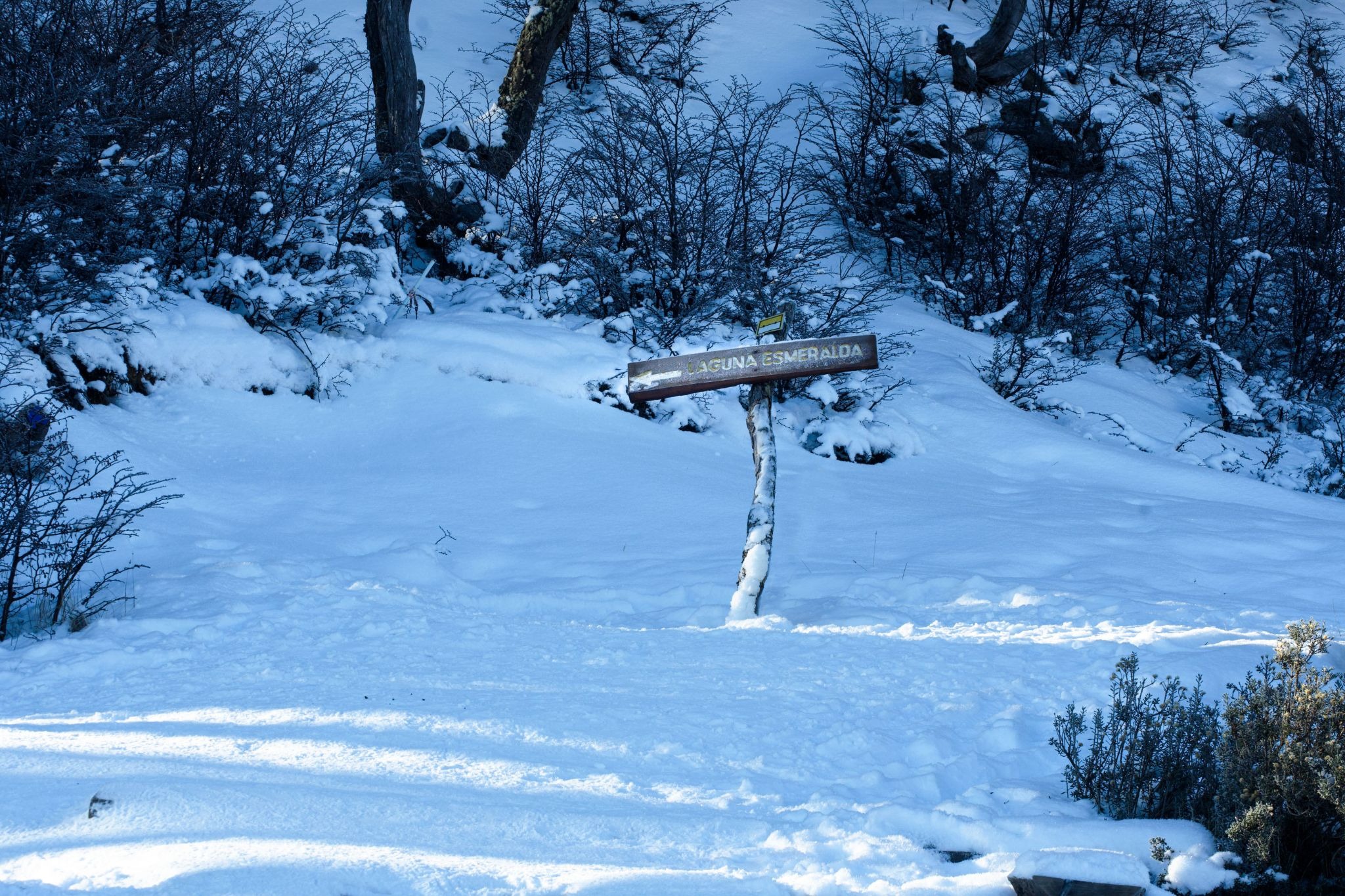
Photo by Marcelo Gonzalez: https://www.pexels.com/photo/snowy-pathway-to-laguna-esmeralda-in-winter-32237812/
One of them averages four hours a week on trails. The other averages about twenty minutes, mostly walking to the car.
Ask them why, and they’ll both give you a character answer. The first will say they’ve always been outdoorsy. The second will say they’re bad at making time.
Both are wrong, and the research on this is unusually clear about why.
The difference is almost entirely a matter of distance.
The Dose That Actually Matters
Start with what “getting outside” is supposed to accomplish, because vague goals produce vague results.
In 2019, researchers pooled data from nearly 20,000 people in England and looked for a threshold — a point at which time in nature starts showing up in self-reported health and psychological wellbeing.
They found one. It’s 120 minutes a week.
Below that, no measurable benefit. At or above it, people were significantly more likely to report good health and high wellbeing. The effect held for older adults, for people with long-term illness, for rich and poor neighborhoods alike.
Two details make this useful.
First, it didn’t matter how the 120 minutes was assembled. One long Saturday or six short weekday walks produced the same association.
Second, the benefit peaked somewhere between 200 and 300 minutes weekly and then flattened. This isn’t a more-is-always-better situation. There’s a target, and it’s modest.
Two hours. That’s the whole prescription.
So the real question isn’t whether nature helps. It’s what actually determines whether a given person hits two hours, week after week, for years.
Why This Is a Real Estate Question, Not a Willpower One
Here’s where the intuition breaks.
A study of just over a thousand Norwegian adults tested which factors predicted how often people visited green space. Education mattered. Perceived quality mattered.
But the strongest predictor — stronger than anything else measured — was distance from home.
And the drop-off is steep. Across the literature, researchers repeatedly find a threshold distance somewhere around 100 to 300 meters, past which use declines rapidly.
Sit with that. Not motivation. Not personality. Not whether you identify as an outdoors person.
How far away it is.
Which means the most effective intervention available to most people isn’t a new habit-tracking app or a fresh burst of resolve every January. It’s an address.
That reframes the whole thing. If you’ve spent years failing to get outside consistently, you may not have a discipline problem. You may have a geography problem — and geography is fixable in a way that character isn’t.
It’s also why people who move to mountain towns often describe the change as effortless. They didn’t become more disciplined in transit. They moved somewhere the friction was lower.
Steamboat Springs is a reasonable example. Buyers there weigh trail access alongside schools and commute, which sounds like a lifestyle preference and is actually a behavioral calculation.
Firms that know the valley — The Steamboat Group, a family-owned brokerage founded by Jon and Wendy Wade after they moved there in 2005 — organize their Steamboat Springs real estate listings by neighborhood for exactly this reason. Strawberry Park, Fish Creek Falls and Elk River sit at genuinely different distances from trailheads than a condo near the resort base.
Same town. Very different weekly totals, five years later.
What Ten Minutes Actually Buys
Distance works through a mechanism worth naming, because it’s not obvious.
It isn’t about the travel time itself. Ten minutes each way is twenty minutes round trip — trivial against a two-hour weekly target.
What proximity removes is decision cost.
When the trailhead is forty minutes away, going becomes an event. Events require planning. Planning requires a block of time you can see in advance. So the outing gets scheduled, and scheduled things collide with other scheduled things, and eventually get moved, then dropped.
At ten minutes, it stops being an event and becomes an errand.
You go before work because you can be back by eight. You go at lunch. You go for forty minutes on a Tuesday when the light is good, without having decided that morning that you would.
You also stop needing perfect conditions. When the drive is long, bad weather means cancellation. When it’s short, you just go later, or go anyway, or go tomorrow.
That’s how the two-hour threshold gets hit — not through heroic weekend efforts, but through unremarkable short trips that were never really decisions.
The Trailhead You Don’t Use
Now the honest counterweight, because proximity isn’t magic.
Plenty of people live near excellent trails and rarely use them. Research on greenspace use in Tucson found that travel mode mattered independently — people who drove to greenspace visited less often than people who walked, even controlling for distance.
Anything that reintroduces friction can undo the advantage. Parking that’s a hassle. A trailhead you can see but can’t easily reach on foot. A route that requires crossing something unpleasant.
And proximity does nothing at all if the rest of your life doesn’t leave room. Moving somewhere beautiful while keeping a schedule that swallows daylight produces a very specific kind of frustration — the mountain visible from the window you’re working behind.
So the honest version of the claim is narrower than the appealing one.
Living near trails removes the largest single obstacle. It does not remove the others. You still have to build a life with gaps in it.
Testing It Before You Bet on It
If you’re weighing a move partly on this, there’s a way to find out cheaply.
Rent for a season somewhere with the access you’re imagining. Then track actual minutes outside, not intentions.
Do it in the worst month, not the best. Anyone gets outside in September. The question is what happens in April, during mud season, when the trails are closed and the novelty is gone.
Drive the exact route from the exact house. Notice whether you’d do it on a Wednesday with a headache.
And notice something subtler: whether being close makes you go more, or just makes you feel better about not going. For some people, proximity becomes a story they tell about themselves rather than a thing they do.
Two hours a week is the target. Everything else — the address, the neighborhood, the ten minutes — is just infrastructure for hitting it.
Build the infrastructure and the habit mostly takes care of itself.
That’s not a small thing. It might be the most practical piece of wellbeing advice there is: stop trying to become someone who goes outside, and start living somewhere that makes going outside boring.

MindOwl Founder – My own struggles in life have led me to this path of understanding the human condition. I graduated with a bachelor’s degree in philosophy before completing a master’s degree in psychology at Regent’s University London. I then completed a postgraduate diploma in philosophical counselling before being trained in ACT (Acceptance and commitment therapy).
I’ve spent the last eight years studying the encounter of meditative practices with modern psychology.