
There’s something odd about birdwatching that nobody mentions.
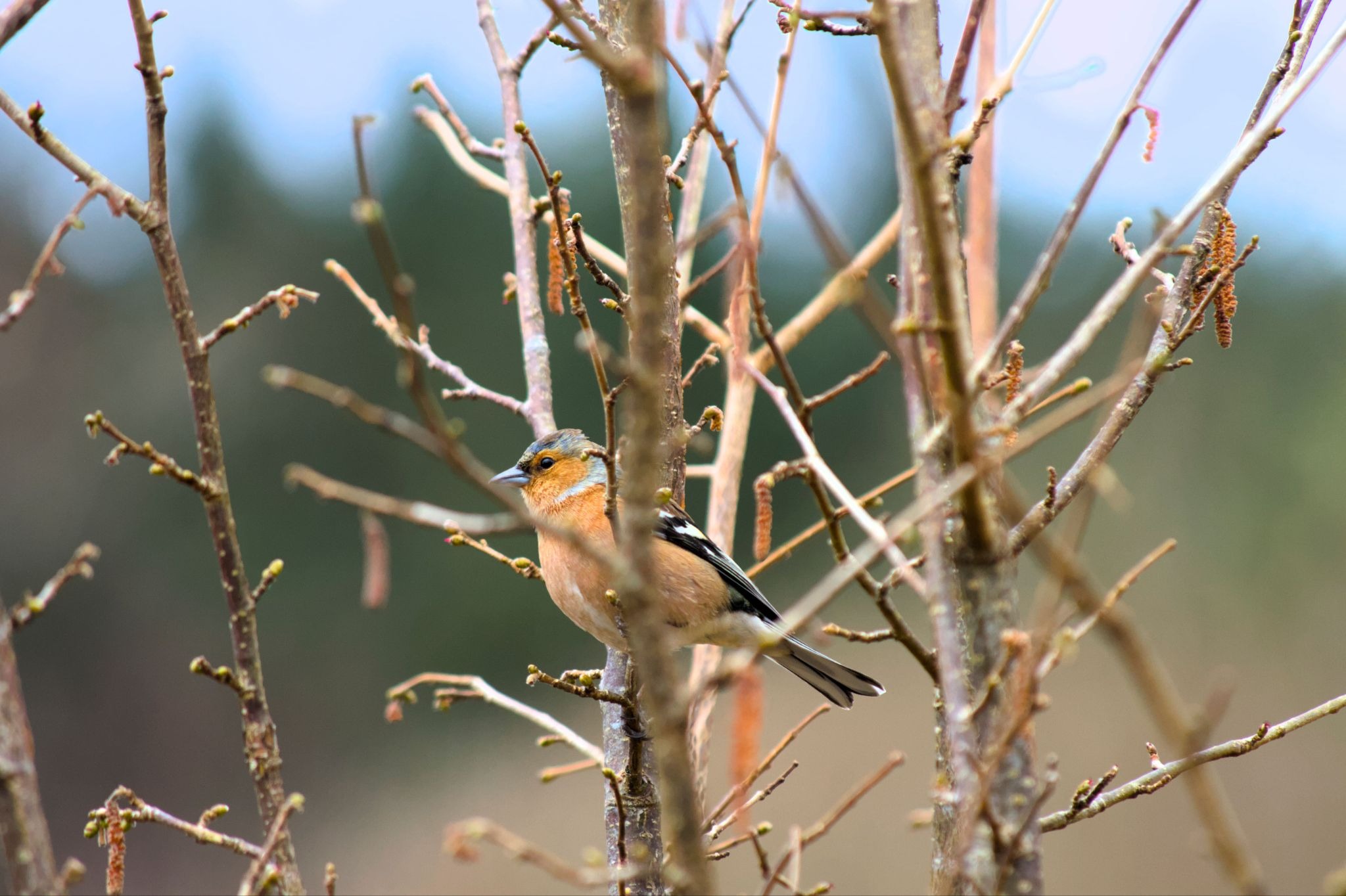
Photo by Oelnbod : https://www.pexels.com/photo/eurasian-chaffinch-on-branch-of-tree-21357616/
It’s marketed as relaxation. Gentle. Restful. A hobby for people winding down.
But spend an hour actually doing it and you’ll notice it doesn’t feel restful at all. It feels like concentration. You’re scanning, holding still, tracking a movement in the corner of a hedge, listening for a call you half recognize.
That’s work. Real, sustained, effortful work.
And yet you come home lighter than when you left.
That contradiction is the whole interesting thing here, and it points at something useful about how attention actually works.
The Paradox of Effortful Rest
The dominant explanation for why nature restores us is Attention Restoration Theory, developed by Rachel and Stephen Kaplan in the 1980s.
The premise is that focused, deliberate attention is a finite resource. Spend all day forcing it onto tax returns and spreadsheets and it fatigues, producing irritability and an inability to concentrate.
The proposed antidote is soft fascination — stimuli that hold your interest without demanding effort. Clouds moving. Water. Leaves.
Crucially, soft fascination leaves mental room over. You’re engaged, but there’s still space to think.
That’s contrasted with hard fascination: things that grab attention completely and leave no room. In a study of 398 adults, researchers found walking in nature registered as softly fascinating, while watching television registered as hard fascination.
So where does birding fit? It’s clearly not passive. But it also doesn’t drain like work does.
The answer is in a part of the theory people skip. The Kaplans said restorative settings need four things: being away, extent, fascination — and compatibility, meaning the activity genuinely matches what you want to be doing.
That’s the variable. Effort you’ve chosen, on something you actually care about, doesn’t deplete the way effort you’ve been assigned does.
Birding is demanding attention that costs you nothing, because you want to be spending it.
Calgary Takes Care of This Better Than Most Cities
Birding needs somewhere to happen, and this is where geography stops being incidental.
Most cities give you fragments — a park here, a green strip there, each requiring a separate trip. Calgary is unusual in that its green space is a connected system.
The city maintains roughly 1,000 km of regional pathways plus another 96 km of trails, which is generally reckoned the longest urban pathway network in North America.
It also holds two of the largest urban parks in the country. Fish Creek is the second-largest urban park in Canada, running 19 km east to west with over 100 km of trails inside it. Nose Hill covers 11 square kilometers of native grassland and is bordered on all sides by 12 residential communities.
That matters for birds specifically. River corridor, wetland, grassland, aspen woodland and reservoir all sitting inside one city produces genuine species variety rather than the same six urban birds everywhere.
Fish Creek alone hosts more than 200 bird species, according to a local rundown of the city’s parks kept by the Justin Havre real estate team — including great blue herons along the water and the occasional bald eagle. The Inglewood Bird Sanctuary sits directly on the Bow River pathway. North Glenmore and Bowness both put you on water.
The practical upshot is that in Calgary you can bird without it becoming an expedition. Which, as anyone who has abandoned a hobby knows, is usually what determines whether you keep doing it.
What a Meditation Teacher Would Recognize
Here’s where this stops being a nature-is-nice argument.
Strip birding down to its mechanics and it maps almost exactly onto formal attention practice.
You get an external anchor. Sitting meditation asks you to rest attention on the breath. Birding gives you a hedge, a treeline, a stretch of water. Same function, easier to hold, because the object is genuinely interesting.
You practice returning. The core skill in meditation isn’t sustained focus — it’s noticing you’ve drifted and coming back, thousands of times. Birding trains this constantly. Your mind wanders to an email, a bird moves, you’re back. That loop is the exercise.
You learn not to grasp. The bird leaves. It always leaves. You can’t hold it, chase it, or make it return. You either accept that and keep looking, or you spend the morning frustrated. That’s a lesson people work on for years in retreat centers, delivered here by a warbler with no interest in teaching you anything.
You get calibrated patience. Long stretches of nothing punctuated by seconds of something. Most of modern life has trained the opposite expectation — constant stimulation, instant response. Sitting through forty quiet minutes rebuilds a tolerance most of us have lost.
None of this requires believing anything. There’s no doctrine attached to a chickadee.
For people who find sitting meditation unbearable — and plenty of thoughtful people do — this is a version of the same training with the difficulty moved somewhere more tolerable.
The Bird Is Not the Point
The transferable part isn’t ornithology.
It’s that you’re practicing a specific perceptual skill: noticing small changes in an environment you’d otherwise treat as background.
Do that regularly and it leaks. People who bird often report that they start hearing things on ordinary streets they never heard before. The soundscape they’d been filtering out becomes available again.
That generalizes further than it sounds. The same faculty — noticing what’s actually present rather than what you assumed was there — is what underlies most of what mindfulness training is trying to build.
And there’s a mood effect on top of the attention effect. A study using a smartphone app collected 26,856 real-time reports from 1,292 people and found that seeing or hearing birds was associated with improvements in mental wellbeing that lasted beyond the moment itself.
The improvement showed up in people with a diagnosis of depression as well as in those without. And it wasn’t explained away by the presence of trees, plants or water — the birds appeared to be doing something on their own.
Where the Evidence Is Softer
Worth being straight about the limits.
Attention Restoration Theory is widely cited, but a systematic review examining the empirical support concluded that the strength of the evidence for the proposed mechanism is less settled than the popularity of the theory suggests. Soft fascination in particular is hard to define and harder to measure.
The birdlife study is observational too. It shows association, not proof of cause, and it relies on self-report.
So the honest claim is narrower than the enthusiastic one. Something real is happening. The precise mechanism is still being argued about.
That’s fine. You don’t need the mechanism settled to go outside on Saturday.
Starting Badly Is Fine
If you want to try it, resist the urge to prepare.
You don’t need binoculars, an app, or the ability to identify anything. Those come later and they’re not the practice.
Go somewhere with water and edges — the transition between two habitats is where birds concentrate. Sit down. Give it forty minutes, which is longer than feels reasonable and about when things start happening.
Don’t try to name anything. Just watch one bird for as long as it stays.
You will be bored. That’s not the practice failing. That’s the first ten minutes of every attention practice ever devised, and pushing through it is the entire skill.
Then a bird moves, and you come back.
That’s it. That’s the whole training.

MindOwl Founder – My own struggles in life have led me to this path of understanding the human condition. I graduated with a bachelor’s degree in philosophy before completing a master’s degree in psychology at Regent’s University London. I then completed a postgraduate diploma in philosophical counselling before being trained in ACT (Acceptance and commitment therapy).
I’ve spent the last eight years studying the encounter of meditative practices with modern psychology.