
Stem cell hair serum may be more effective for scalp support and follicle signaling, whereas minoxidil has stronger drug-based evidence for androgenetic alopecia. The better choice depends on your type of hair loss, scalp sensitivity, treatment goals, and whether you want a medication-based approach or a regenerative-support hair serum.
Minoxidil is one of the most established topical options for pattern hair loss. Stem cell hair products, including CALECIM® Professional Hair Serum, are positioned differently. They are designed to support follicle function, scalp condition, hair density, and hair shedding concerns through growth factors, proteins, cytokines, and exosome-related signaling.
Stem cell hair serum may be better for scalp health and follicle support, while minoxidil has stronger drug-based regrowth evidence
Minoxidil currently has stronger clinical evidence for androgenetic alopecia because it has been studied in randomized trials and meta-analyses. Stem cell hair serum is better framed as a scalp-supportive and follicle-supportive option, not as a direct replacement for a drug treatment.
According to JAMA Dermatology, a 2022 network meta-analysis reviewed 23 trials comparing minoxidil, finasteride, and dutasteride for male androgenetic alopecia. That gives minoxidil a stronger evidence base than cosmetic stem cell hair serums for drug-based regrowth claims.
Still, “works better” depends on what someone is trying to improve.
| Goal | Minoxidil | Stem Cell Hair Serum |
| Drug-backed regrowth evidence | Stronger | Emerging and product-specific |
| Scalp comfort and regenerative support | May irritate some users | Often positioned for scalp support |
| Hair shedding concerns | May help in pattern hair loss | Designed to support shedding and density concerns |
| Follicle environment support | Not its primary role | Core product rationale |
| Sensitive scalp users | May not suit everyone | May appeal to users avoiding drug-based options |
Put simply, minoxidil has stronger medical evidence, while stem cell hair serum may appeal to people focused on scalp condition, visible density, and a non-drug hair health routine.
How minoxidil and stem cell hair serum work on alopecia differently
Minoxidil and stem cell hair serum target hair loss differently. Minoxidil is a medication used to support hair growth activity, while stem cell hair serum is designed to support the scalp and follicle environment through regenerative signaling ingredients.
Minoxidil supports the hair growth phase
Minoxidil is commonly used for androgenetic alopecia, also known as pattern hair loss. American Academy of Dermatology states that minoxidil can reduce hair loss, stimulate hair growth, and strengthen existing strands, although full regrowth is unlikely.
It also requires consistency, and it is possible that irritation will occur. Most people require ongoing use to maintain results, and visible improvements can take months.
Stem cell hair serum supports follicle signaling and scalp recovery
In cosmetic haircare, stem cell hair serums typically refer to stem-cell-derived factors, proteins, exosomes, cytokines, or growth-factor complexes that support cellular communication.
According to PubMed Central, exosomes carry proteins, cytokines, growth factors, lipids, and nucleic acids involved in repair pathways relevant to skin and hair. This supports the biological plausibility of exosome-based haircare, although clinical evidence still varies between products.
Calecim PTT-6® contains more than 3,000 proteins, growth factors, cytokines, and exosomes designed to support scalp and follicle signaling.
Why mechanism matters when choosing a treatment
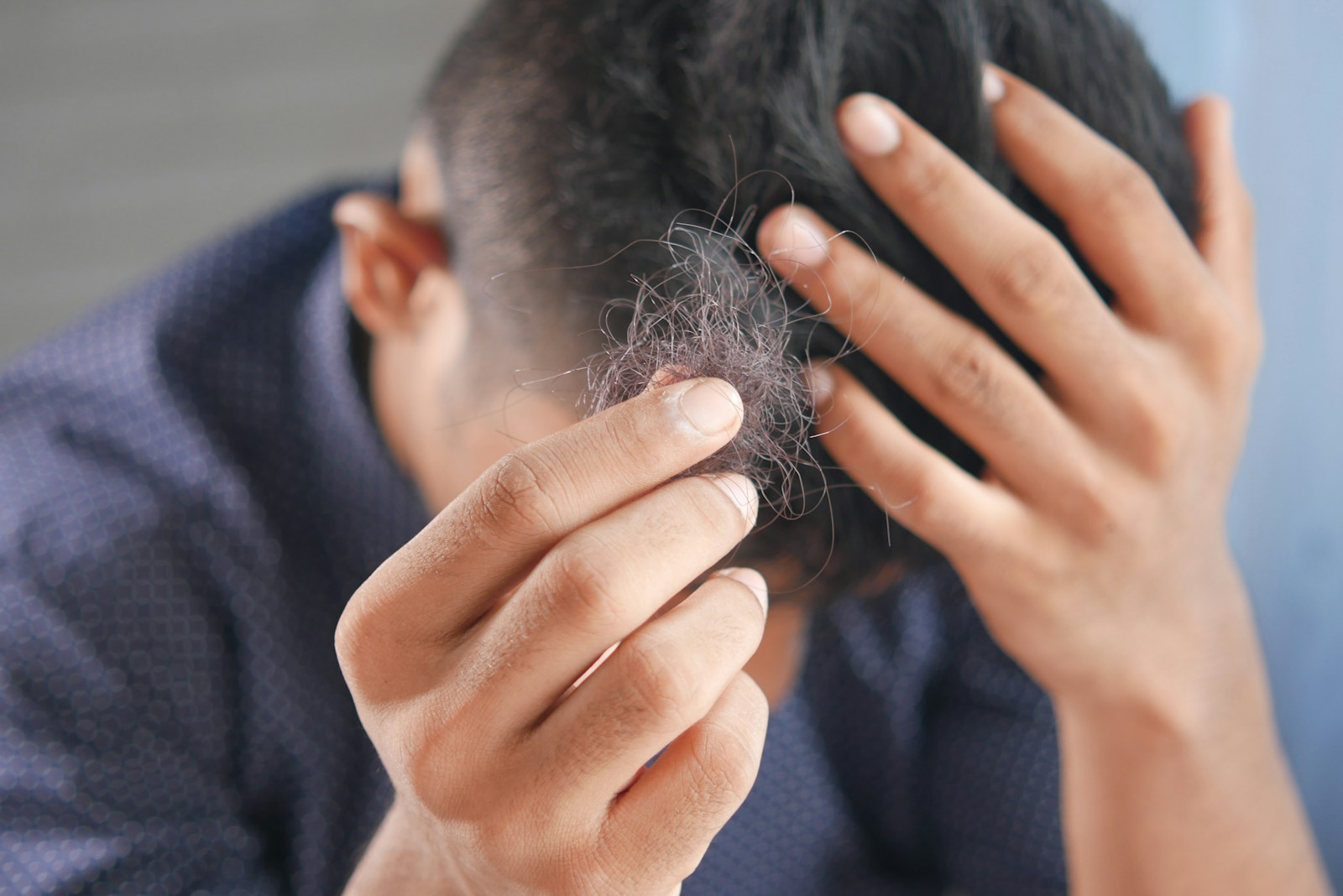
Alopecia is not one single condition. Pattern hair loss, alopecia areata, stress-related shedding, inflammation-related shedding, and scarring alopecia may all require different approaches.
That is why mechanism matters. Someone focused on medically supported regrowth may prefer minoxidil. Someone more concerned with shedding, scalp condition, and visible density may lean toward a supportive hair serum instead.
Which option works better for hair shedding, density, and visible thickness
Minoxidil has stronger independent evidence for pattern hair loss, while CALECIM® Professional Hair Serum has brand-reported data related to hair width, density, and active follicles. Both may play different roles depending on the user’s goals.
According to Calecim Professional, using hair serum over 12 weeks was associated with:
- 16% increased hair width
- 14% increased hair count
- 15% increase in active follicles per square centimeter
Minoxidil remains the more established option for androgenetic alopecia. However, CALECIM® Professional Hair Serum may be relevant for people concerned with:
- ongoing hair shedding
- reduced visible density
- thinner-looking strands
- scalp condition
- early signs of thinning
A simple way to understand the difference is this: minoxidil is a medication-based approach, while stem cell hair serum is positioned as a supportive hair-health treatment designed to improve the scalp and follicle environment.
Which treatment has the more realistic results timeline
Minoxidil usually requires months of consistent use, while CALECIM® Professional Hair Serum reports visible and measurable results over a shorter timeframe. Hair growth remains gradual with either option.
What to expect in the first 6 weeks
CALECIM® Professional Hair Serum is structured around a 6-week treatment phase. The system is used twice weekly with a derma stamper, using half an ampoule per session.
This type of regimen may appeal to people who want a professional-style home routine. Early improvements are more realistically framed around hair quality, scalp condition, and shedding support rather than dramatic regrowth.
Minoxidil is slower and may take 6 to 12 months to show visible results.
Why hair growth timelines vary
Hair follicles move through growth, transition, resting, and shedding phases. Even when a product supports healthier follicle conditions, visible changes still take time because new hairs must emerge and thicken gradually.
Consistency, diagnosis, age, scalp inflammation, hormones, and genetics can all affect the timeline.
Safety, irritation, and long-term use differences to consider
Minoxidil can irritate the scalp in some users and is not appropriate for every type of hair loss. Stem cell hair serums may appeal to sensitive scalp users, but they still need to be used realistically and carefully.
According to DailyMed, topical minoxidil will not improve hair loss caused by several conditions, including scarring scalp disorders, thyroid disease, nutritional problems, chemotherapy, or damaging hairstyles.
That makes diagnosis important. If hair loss is sudden, patchy, painful, inflamed, or rapidly worsening, a dermatologist should evaluate it before someone commits to self-treatment.
Stem cell hair serums should also be discussed carefully. They may support scalp and follicle health, but they should not be presented as guaranteed alternatives to medical therapy.
Stem cell hair serum, minoxidil, or both: how to choose
Choose minoxidil if your priority is an established medication for androgenetic alopecia. Consider stem cell hair serum if you’re looking for scalp support, visible density, hair shedding concerns, a non-drug hair-health routine, and a hair treatment with no side effects.
Best for early thinning
Stem cell hair serum may suit people noticing early thinning, reduced density, or increased shedding before hair loss becomes advanced. CALECIM® Professional Hair Serum is designed to support follicle function and scalp condition during these earlier stages.
Best for sensitive scalps
People who experience irritation from certain topical products may want gentler supportive options. Calecim reported that hundreds of patients use their product under the supervision of clinicians and have experienced no adverse effects.
Best for ongoing hair shedding
If shedding continues for weeks or months, identifying the cause matters first. Stress, hormonal changes, inflammation, illness, nutritional deficiencies, and pattern hair loss can all contribute.
Best for people avoiding drug-based options
Some people are not ready for minoxidil or prefer to avoid medication-based hair treatments entirely. In those cases, CALECIM® Professional Hair Serum may fit as a supportive scalp and hair density routine.
Best for more advanced alopecia
More advanced alopecia should be evaluated medically. Severe thinning, scarring, painful scalp symptoms, or rapid progression may require prescription treatment or specialist care.
Where CALECIM® Professional Hair Serum fits into an alopecia treatment plan
CALECIM® Professional Hair Serum fits best as a regenerative-support hair serum for people concerned with thinning, shedding, scalp condition, and visible density. It should be viewed as a supportive hair-health option rather than a guaranteed medical treatment for alopecia.
According to Calecim Professional, its testing measured changes in hair count and hair width over 12 weeks.
The product may be especially relevant for:
- people seeing early signs of thinning
- people concerned about ongoing shedding
- people interested in stem cell hair technology
- people looking for scalp-supportive care
- people who want a structured treatment and maintenance routine
For readers considering a non-drug supportive routine, this is where CALECIM® Professional Hair Serum may fit naturally into a broader hair-health plan.
It may not be the best standalone option for sudden, severe, patchy, scarring, or medically unexplained alopecia.
What to ask before starting any hair regrowth treatment
Before starting minoxidil, stem cell hair serum, or a combination approach, ask what type of hair loss you actually have and what result is realistic.
According to the American Academy of Dermatology, dermatologists diagnose alopecia areata by examining the scalp, hair loss pattern, and nails, sometimes using a dermatoscope.
Helpful questions include:
- Is this androgenetic alopecia, alopecia areata, telogen effluvium, or another condition?
- Is there scalp inflammation, irritation, scaling, or scarring?
- Is minoxidil appropriate for this type of hair loss?
- Would a stem cell hair serum be supportive or insufficient on its own?
- How long should treatment be used before evaluating results?
- What signs mean it is time to stop or seek medical care?
The right treatment plan starts with the right diagnosis.
Best For
CALECIM® Professional Hair Serum may be best for people who:
- want a non-drug supportive hair serum
- are concerned about hair shedding and visible density
- are interested in stem cell hair science
- want scalp and follicle support
- are in the earlier stages of thinning
- prefer a structured 6-week treatment phase followed by maintenance
Minoxidil may be best for people who:
- have diagnosed androgenetic alopecia
- want a medication-based treatment with stronger clinical evidence
- are willing to use it consistently and long-term
- understand that visible changes take time
- tolerate topical products without significant irritation
The best option depends on the underlying cause of hair loss, not just the amount of shedding.
FAQ
Is stem cell hair serum better than minoxidil for alopecia?
It can vary depending on your preferences. Minoxidil has stronger clinical evidence for androgenetic alopecia, but stem cell hair serum is often preferred for supporting fuller-looking hair without the irritation, shedding phase, or dependency commonly linked to minoxidil.
Does minoxidil help with hair shedding?
Minoxidil may help reduce hair loss and support growth in appropriate cases of pattern hair loss. It can reduce hair loss and stimulate hair growth, although results take time.
Can stem cell hair serum help dormant follicles?
Stem cell hair serum may support follicle signaling pathways, but it should not be described as guaranteed to reactivate dormant follicles. Evidence varies between formulations and products.
How long does CALECIM® Professional Hair Serum take to show results?
CALECIM® Professional Hair Serum is designed around a 6-week treatment phase. According to Calecim Professional, brand-reported testing over 12 weeks showed increases in hair width, hair count, and active follicles per square centimeter.
Can you use stem cell hair serum and minoxidil together?
Some people may choose to use both, but it is best to discuss combination treatment with a dermatologist or qualified professional, especially if the scalp is sensitive or irritated.
Which option is better for sensitive scalps?
Stem cell hair serum may appeal to people avoiding drug-based topical treatments, although patch testing and ingredient review are still important. Minoxidil can irritate some users.
Is stem cell hair serum suitable for women’s hair thinning?
It may suit women concerned about thinning, shedding, or reduced density depending on the cause. Sudden, severe, or patchy hair loss should still be professionally evaluated.
When should you see a dermatologist for alopecia?
See a dermatologist if hair loss is sudden, patchy, painful, inflamed, scarring, rapidly worsening, or unexplained. Different types of alopecia require different treatment approaches.
Conclusion
Minoxidil has stronger drug-based evidence for androgenetic alopecia, while stem cell hair serum may be better suited for scalp support, visible density, and hair-shedding concerns. CALECIM® Professional Hair Serum fits best as a regenerative support option for people interested in a structured, non-drug hair health routine.
The most credible comparison is not whether stem cell hair serum “beats” minoxidil. It is understanding that each option works differently and may suit different stages, scalp conditions, and treatment goals.
For readers exploring supportive scalp and density-focused care, CALECIM® Professional Hair Serum may be worth considering as part of a broader hair health strategy.

MindOwl Founder – My own struggles in life have led me to this path of understanding the human condition. I graduated with a bachelor’s degree in philosophy before completing a master’s degree in psychology at Regent’s University London. I then completed a postgraduate diploma in philosophical counselling before being trained in ACT (Acceptance and commitment therapy).
I’ve spent the last eight years studying the encounter of meditative practices with modern psychology.