
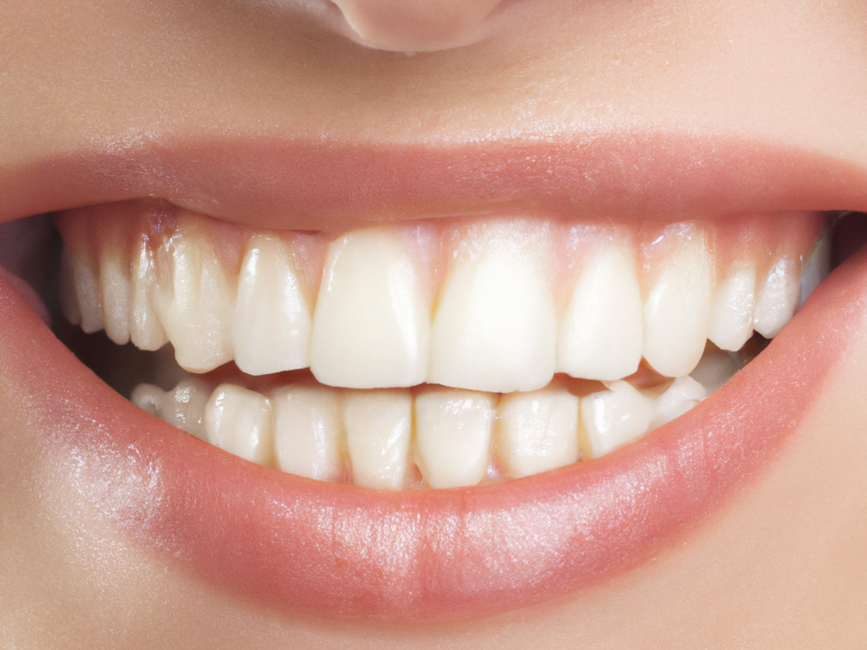
A century ago, teeth were a matter of health rather than appearance, and nobody in Los Angeles or anywhere else expected a straight, uniformly bright set of them. That changed when film arrived, faces got projected forty feet high, and the close-up became the defining shot of the medium. What audiences saw on screen slowly became what they expected to see in the mirror. The shift took decades, and it never really stopped, and it explains a great deal about how people evaluate their own faces today.
Where the Ideal Comes From
Porcelain veneers were invented for the movie business, created in the 1920s as temporary shells actors wore to fix teeth on camera, and the material and technique have been refined continuously ever since. The problem with the modern version is that skill varies enormously between practitioners, and a poor result is visible to everyone who looks at your face. Dr. Jon Marashi has built a Brentwood practice around porcelain veneers in Los Angeles, hand sculpting each one inside the mouth rather than outsourcing the work to a lab. He accounts for skin tone, age, and how the mouth moves in conversation, which is what separates a natural result from an obvious one.
Silent Film and the Close Up
Before sound, actors carried everything through the face, and directors leaned on tight framing to do it. That framing put teeth on display at a scale nobody in human history had experienced before. Studios noticed quickly. Performers with irregular teeth read poorly on film, and the fix was cosmetic rather than medical. What began as a practical production problem turned into an aesthetic standard, because audiences watched these faces weekly for years and gradually absorbed them as the reference point for what a face was supposed to look like.
The Studio System and Manufactured Faces
Studios in the 1930s and 1940s controlled nearly everything about how their contract performers appeared. Names were changed, hairlines adjusted, weight managed, and appearance corrected wherever it did not fit the image being sold. This was industrial work, handled by departments with budgets, and teeth were part of it. The result was a generation of screen faces that shared a set of characteristics none of them had been born with. Audiences had no way of knowing which parts were natural, so the whole package registered as simply how beautiful people looked.
Television Brought It Home
Film created the standard and television spread it. Once sets were in most American living rooms, people were seeing polished faces nightly rather than occasionally, in their own homes, alongside their own families. The comparison became constant and unavoidable. Advertising during those hours reinforced the message directly, selling products aimed at closing the gap between the viewer and the screen. By the 1960s, the idea that appearance was something you worked on rather than something you were issued had moved well beyond Hollywood and into ordinary suburban expectations.
Color, Then Digital
Each technical improvement raised the standard again. Color film revealed shade and tone that black and white had hidden entirely. High definition television in the 2000s exposed texture and detail that earlier broadcasts simply could not resolve. Performers who had looked flawless under previous formats suddenly did not. Every advance in image quality forced another round of adjustment, and each new baseline stuck. What audiences will accept as normal has ratcheted in one direction for a hundred years without ever moving back.
Cameras in Every Pocket
The most significant change of the past twenty years is that ordinary people started seeing themselves the way film once showed actors. Front-facing cameras, video calls, and constant photographs mean most people now look at their own faces more times in a week than their grandparents did in a year. Wide-angle phone lenses distort proportions, and screens render detail unforgivingly. That combination has driven a substantial share of the current interest in appearance, because the comparison is no longer between you and a movie star but between you and yourself, viewed under conditions nobody was designed for.
The Backlash Toward Restraint
For a stretch, the visible signal of intervention was the point. Extremely uniform, extremely bright results were sought deliberately, because looking obviously corrected signaled that you could afford it. That preference has reversed. The current standard runs toward results that read as natural, with slight variation in shade, proportions that suit the individual face, and nothing that announces itself. Achieving that is considerably harder than the alternative, since uniformity is easy to manufacture and subtlety requires judgment about a specific person rather than adherence to a template.
What the Standard Costs
None of this comes without consequences worth naming. A visual ideal built by an industry, refined for cameras, and distributed globally sets expectations that most people cannot meet without intervention, and it hits some groups harder than others. It has narrowed what registers as normal across a lot of the world. Awareness of that history is worth having, not because it resolves anything, but because knowing an ideal was constructed rather than discovered changes how much authority it deserves over anyone’s sense of themselves.
Where It Goes Next
Filters and editing tools have introduced something genuinely new, which is a version of your face that exists only on a screen and matches nothing in a mirror. Some people now compare themselves against an edited version of themselves, which is a stranger situation than any previous generation faced. Where that leads is unclear. What seems reasonably certain is that the direction Hollywood set in the 1920s has not reversed, and the tools for meeting the standard keep improving faster than the standard itself keeps moving.

MindOwl Founder – My own struggles in life have led me to this path of understanding the human condition. I graduated with a bachelor’s degree in philosophy before completing a master’s degree in psychology at Regent’s University London. I then completed a postgraduate diploma in philosophical counselling before being trained in ACT (Acceptance and commitment therapy).
I’ve spent the last eight years studying the encounter of meditative practices with modern psychology.